Defining Oneself Anew: A Story of Urbanization
EN
- Urban Studies
- Modernization
A course paper that uses a science-fiction narrative to explore urbanization, family history, and the making of identity. Moving between an imagined future and intergenerational experiences of social change, it considers how work, place, and memory shape a sense of self.
“…consider the infinite complexities that bring even the smallest creature to life, yet we dare to recreate that essence in our own image. ‘More human than human’ is our motto because humanity is not a state of birth, but an ongoing act of becoming. Every day, my ‘angels’ experience, learn, and adapt, not just mimicking the human condition but evolving through it.
What is a human, if not a constant unfolding of perception and being? In this ever-changing tableau, both you and I, and the androids we fear and cherish, are ceaselessly becoming. To be human is to embrace the perpetual journey of defining oneself anew.“
-Damon Tyria, The Founder of Tyria Corporation
Introduction: Ages Apart
Imagine a place where distances and destination routes are calculated in light years, where cars are rusting in junkyards, where human lifespan exceeds centuries, where skyscrapers continue to grow, where digitalization intrudes through every aspect of life and where a ‘natural’ tree seed is worth a fortune; our story begins in a world that is quite distant, both in spatial and temporal terms. We are talking about a “magnificent” age where humanity has conquered nature piece by piece, placed itself at the core of the food chain, crushed every inch of nature and can effortlessly shape it according to its own lifestyle and desires. Those old writings, in which progress, prosperity, and technological madness were fictionalized in a manuscript style called “science-fiction” by the authors of the ancient civilizations, have now become mere children’s fairy tales. Well, even though we mention the name of “prosperity”, civilization has not been able to spread this welfare to everyone: these stories that we call “children’s tales” are only told by people who lack the capital to send their own children in “ nutrituent tanks “ and instead, are doomed to live in lower-class suburbs in the city called “ Low Lands “, which digitalization has not yet conquered. These children tales have only passed down from word to mouth by families who were “burdened to” raise their children in their own homes.
Our story unfolds in the planet of Mera Nea, which actually translates to “New Soil.” After the destruction of the prior, “ Old World ” due to nuclear warfare, humanity had to pick a new base of survival, which led to Mera Nea becoming the centre of prosperity for humans. This transition towards the New World, Mera Nea, not only marked an endeavor to escape from the apocalypse, but the dissolution of the ancient order as well; as to be latter discussed in our story. On the planet Mera Nea, Damon Tyria, both a successful psychoneer and an ambitious businessman, found a way to produce artificial, conscious bodies that look and function almost-identical to humans. The reader should pay attention to the name we use here as psychoneer, a word to connotate a new discipline by combining the words “psychology” and “engineer”, because consciousness; that is, “soul”, was now something that had to be directly produced and functionalized.
These new inventions of Tyria, which we will call “ androids “, have opened a new era in human history. Previous civilizations had found a way to “artificialize intelligence” and radically changed the course of history, but now this meant “artificializing the soul as well.”
Through this revolution, unlike an old thinker that denoted humanity before the industrialization of agriculture as “noble savages”, humanity has now found a way to become “joyful dormants”. These androids, as assets, were appointed as slaves tasked with playing a key role in the production and processing of essential resources for survival. Now, when humans are dismissed from their old jobs, they can devote their spare time to sleeping all day, indulging in carefree entertainment, and engaging in artistic activities to satisfy their spiritual well-being as “the possessors of a true soul”.
Although this narrative seemed quite promising, it only applied to certain elites that had the advantage to isolate themselves apart from the altering structures of daily life. Those who were replaced by androids were tossed to Low Lands and doomed to live under the harsh conditions of “non-digitalized space.” Soon after, the Low Lands became ghettos of drastic standarts of life in which street-wide warfares, illegal trafficking, extortion and homicides frequently took place. Those who were fortunate enough to adjust themselves to the new structures of the production modes were able to establish somewhat moderate standarts of living: there is constant need for human labor in mental tasks to maintain and administeer the gears of the economic structures so that it would keep going.
The focal point of our story, which we will shortly call him “ E. ”, were among those fortunate enough to carve a spot for themselves in the “ New World .” In the capital of the planet, Angora, E. was employed as a researcher in the Academia de Mera Nea, excelling on “ Studies of Artificial Administration .” Aside from his academic studies, he was assigned as a configurator in the Republic of Mera Nea . As a configurator, he consulted governmental institutions mainly on the matters of integrating androids to the labor force. Although the androids were mere “soulless constructions”, they required careful examination from experts so that they were equipped with essential needs that would support labor participation. These “needs” were not always in terms of skill however, as the Republic feared a constantly present threat of an android rebellion . Thereby, aside from quantitative terms, androids had to be supervised meticulously in psychological terms as well so that they would “accept” to integrate into the gears of the New World.
E., as an expert in the “ Android Resources” field, worked intensively on the psychological patterns of the androids . E., as both a successful student and practitioner, was intimately familiar with the most critical theories on android behavior patterns known to people today.
As a successful expert, we can say he was in a key position driving the wheels of today’s economy. One day, on his way home in his airbender, a private auto-pilot jet, he suddenly started to gaze from the window and contemplate:
“…what then, is the actual difference between a human and an android? For sure, their iris respond under stress differently than humans, but is that really it? What if I never choose to apply the Iris Test? Then how would I differentiate them apart? Does identity occur innately, or is it a mere matter of perception? They have their own memory implants, they recall their background and act accordingly… they stimulate emotions perfectly, just as how humans act accordingly with ‘algorithm-like’ patterns… they are perfect imitators… what difference then, lies between them and us?”
His contemplation was suddenly interrupted as rain drops started to fell on his windows. As the air light went white, his aircraft went on its course, so did E. with his train of thought:
“…what if I’m an android myself? I’ve never applied the test on myself. How am I different than those? Yes, we are told that all factories, mines, construction sites… all those back-breaking labor sectors are filled up with androids, but aren’t they able to execute mental tasks as well? Isn’t emotionality another mental activity? Aren’t they perfect imitators? Yes, I do have a long background with my family and hometown… but all of them feel like they were left yesterday now. Everyday I wake up, I feel like I’m so lost in my daily routine and work that I almost start a new life… How do I make sure that I wasn’t ‘produced’ this morning and implanted with artifical memories? How do I connect myself to my past?”
He was so lost in his contemplation that he didn’t realized he was staying up in the air for more than ten minutes, after being warned by a security official that he was blocking the airpath. He landed on top of his appartment, and rushed down to his flat.
He rapidly entered his flat, left his suitcase at the door and rushed to sit down on his desk, infront of his astralcommunicator. He sat there in a blank gaze for a while. Was he an android himself? Was he really a human? What did “being a human” mean anyway? E., apart from his life in office, was an avid reader of ancient philosophy. He remembered that he once came across a line while he was reading the old, post-structuralist philosophy of the ancients:
“…identity is a process that is continuously produced.”
This idea gave him an abrupt spark, as he could trace the notion of a “human” back to a process of becoming, instead of a being. Deriving from this, he articulated that “the human, as an essence of becoming, is constantly produced through their interactions, space and place, hometown, family, friends, education, background… the human is not an innate being, but the experience within itself.”
This line of thought led him to posit that humans, like androids, were actually productions of certain forces; but what differentiated them is whether these forces took place in time and space, and how the individual related to them. The androids had implant memories: formative forces that appeared abruptly and discontinuously in an instant point of history. Therefore E.
concluded that if he could trace back his memory and background, and prove the authenticity and the process of his experience of becoming, thereby he could trace back his humannes.
So how would E. trace back his own experience and past? Lost in his professional path, he had not seen or been in contact with his family for nearly half of a century, and had no idea where they were or what they were doing now. He lost contact with them after he moved out to the capital of Mera Nea. He had to recall and make use of his experience to reach out to his family and prove himself. He turned on his astralcommunicator and opened a blank text file.
Thereby, he started to neurodictate fragments of his memories regarding his family and his background, and the hometown he and his family urbanized within.
Although this may seem as a story of a place that is temporally and spatially very, very far away, fear not, dear reader. When close attention is paid to detail, one will realize that the story is actually set in a place much closer, and indeed, it is a story of true experience. This is a story that is itself very humané.
Chapter 1: A New Era, Migration, and Settlement
As E. strived to gather his memories together to track down the background of his family, he tried to recall some narratives that he actually never experienced but have heard from his grandparents. He knew only a little about the Old World, most of it coming from textbooks and stories from his grandparents. He knew that the Old World was a multicultural Autocracy, home to many different nations. Later, this Autocracy would be overthrown by a group of revolutionary military officers and a republic would be built in its place. After the Autocracy was overthrown by the group of officials, an interregnum took place; which would then led to a massive nuclear warfare that devastated the whole planet. Thereby, the transition to the new world, Mera Nea, began and the new planet became a home for the newly established Republic . While this re-territorialization process was taking place, most of the prior citizens found themselves included in the new borders, but especially the people in the west of the old empire at that time were left out from the new borders for a long time. As E. knew, his father’s family were long time residents of the Mera Nea, but his mother’s family was left to stay for some time in the Old World .
The transition from the Old World to Mera Nea was not a process of mere re-territorialization, but a process of re-codification as well. In the New World, during the young Republic era, especially in the capital of Angora and across the planet, new state buildings and republican squares constructed in shades of gray and other pale colors clearly demonstrated the departure from the ancient order towards the new republic. The new order was carefully planned and designed to champion for a new era: This was a sharp, concurrent process of re-territorilization and re-codification that strived to cut ties with the ancient order . However, E.’s family were no direct witnesses of this era: His mother’s family were outside of the new borders, and his father’s family were confined to their small, rural settlement .
E.’s father’s family, were residents of a small, rural area called “ Opium Lands .” The reason why the region got this name was that it was famous for its opium production. Besides this, the region was also famous for its natural thermal springs. The family resided in a small, rural settlement in the area. While most of the residents were later to move out of the Mera Nea to seek work in off-world colonies ; E.’s grandfather, as a fatherless child, had never left his settlement since he had to take care of both his mother and grandmother. The reason behind his becoming a teacher, rooted in his rural life, will be unfolded as the story progresses.
E.’s mother’s family, as mentioned above, were left out of the new borders of the Mera Nea for some time. This happened due to the political atmosphere of the late ages of the prior empire. As different nations within the empire rebelled and declared their independence, the borders of the empire were gradually dissolving and the regions were changing. This region mentioned here was located in the western part of the empire’s borders at that time, and this region was also a kind of center of the empire: many of the social and economic investments were flowing to this region. The region was also famous for its unique type of classical music:
E. had grown accustomed to these songs by listening to them every morning when his grandfather turned on the telecast :
“Dayler dayler viran, dayler… yüzüm güler kalbim ayler…” “Kırmızı gülün ali var, aman aman… her gün aylesem de yeri var…” Although E.’s ancestors were no moneyed tradesmen and spent rest of their lives in their rural neighborhoods, E. could easily notice how his ancestors of this region were somehow able to benefit from the social capital of the region: This situation would always become clear when he compared both his mother’s and father’s side. His mother’s side of the family always bragged about being very meticulous and good at dealing with people, like “diplomats”. On the other hand, his dad’s family was more “happy-go-lucky” and “down-to-earth”. This difference mirrored the big contrast between the regions that used to be the locus of capital of an ancient empire and the other, neglected regions.
It was the second historic period of the Republic in which the urbanization story of E.’s family actually began. The term denotating the second historic period of the Republic, “urbanization of labor,” was coined by an influential academic in Urban Studies, who also happened to be E.’s lecturer at the Academia de Mera Nea. As a hegemonic project, this period marked an era in which the urbanization process went beyond cities and people living in rural areas and slum areas were also started to be included in the urbanization process. During this period, the Republic was grappling with immigration from the Old World as much as it was with migration to extraterrestrial colonies.
E.’s paternal grandfather, as mentioned earlier, was a fatherless child who never stepped out of his settlement . As his neighbors and relatives migrated one by one to outer colonies, he remained at home, obligated to care for his mother and grandmother, likely being a member of one of the few families that stayed. During this time, he began his education at a boarding school system, a remnant of the ancient order, known as “ Teacher Schools .” According to his own account, this school was hours away from his home and settlement . After a few years of education, he became the only teacher in his settlement . During this period, he would frequently travel back and forth between the provinces of the Opium Lands.
Although he had achieved a certain status and moved somewhat away from his settlement, his life was still far from a story of urbanization. During this period, an event he experienced would likely remain etched in his mind for the rest of his life as a profound experience of the Republic ’s urbanization process.
Babaannemi kaybetmemizin üstünden yedi sene geçti, o günden beri dedemle beraber yaşıyoruz. Memleketten kalkıp üniversiteye döneceğim günün hemen öncesinin akşamı bizde adettir, dedemle oturur rakı içeriz. ‘Şu bardak bitsin, sana bir şey anlatacağım; daha da kimseye anlatmadım ilk kez sana anlatacağım’ dedi. Bardağını bitirir bitirmez içeri geçtik ve başladı anlatmaya:
‘Daha biz babaannenle tanışmıyorken, okuduğum dönem bir sevgilim oldu. Köy meydanında açık açık görüşemedik ama uzun zaman gizli saklı çok görüştük. O bir şehirliydi. Bu görüşmelerimiz devam ettikçe artık bana gizli saklı görüşmeyi bırakmak istediğini, ve benim onunla şehre gelerek evlenmemizi istediğini söyledi. Ben o dönem neneme ve Hacı’ya bakmak için sürekli eve gidip geliyordum, köyden fazla uzaklaşamıyordum. Onları arkada bırakmak şöyle dursun, biz yani köy çocuğuyduk; köyden bir erkeğin şehirli bir aileye damat gitmesi milletin muhakkak gözüne batardı. Ona benimle bizim orada kalması için çok ısrar ettim, ama bana şehirdeki evini terk edip buralara yerleşemeyeceğini söylemesiyle daha fazla uzatmama kararı aldık ve görüşmeyi bıraktık. Gel zaman git zaman bir gün ben ilçede, okulda öğretmenlik yaptığım ara otobüsle yolculuk ederken bizim buradan geçiyormuş, muavinden yalvar yakar mola vermelerini istemiş. Kaptan da mola vermeyi kabul edince oradan birilerinin eline bir mektup tutuşturup bizim okula yollamış. Okulda çocuklardan birisi elime mektubu tutuşturdu. Mektupta yol üstünden geçtiklerini, az da olsa beni tekrar görmek istediğini yazmış. O dönem artık babaannenle birlikteydik biz, mektubu okuduğumla kaldım.
Onu tekrar görmeye gidemezdim ve gitmedim.’ Dedem bu olayı üstü kapalı bir şekilde günlüğüne yazmış. Halalarım ve babam bunu daha önceden okumuşlar, ancak senelerce kimse neyden bahsettiğini anlamamış. Birkaç ay önce bize ilk defa anlattı. Cumhuriyet’in ‘emeğin kentleşmeye’ yavaş yavaş başladığı bu döneminde şehirli orta sınıf ile kırsal insanın etkileşimlerinden doğmaya başlayan çelişkileri dedeme buruk bir şekilde gösteren bu tecrübe de böyle bir şeydi işte.
E.’s grandfather met his grandmother while he was serving in the district. She was from a neighboring settlement in the same region, and they married through an arranged match. They had three children, two girls and a boy, who would later become E.’s father. During their time in the district, they became aware that their children were reaching school age and needed good education. But they realized something even more important: for their children to receive a quality education, they too needed to become city dwellers, as the better schools were in the city. Thus, the grandfather had already started building a house in a city not far from Opium Lands, west of Angora, in a place called Old City . The house they built with the savings from his remaining salary was a small, single-story house, not too far from the center.
From then on, the family’s adventure in Old City would begin.
The place we call the Old City will not be unfamiliar to our readers. This area was named “Old City” because it is home to a settlement that is the remnants of an ancient civilization.
Now, with its innovative projects, it is known to be one of the most prosperous and student-friendly cities in the Republic. At the same time, we know that E.’s Urban Studies lecturer frequently visits this area and knows it well. There is much more to tell about the Old City, but we will save it for the rest of this story.
While E.’s father’s side of the family had adapted to city life relatively easily, things were not going so well for his mother’s side. E.’s mother’s side faced a great deal of racism and discrimination within the new borders of the Old World where they were staying. They could not worship freely, could not speak their mother tongue, and were systematically excluded from the public sphere. This place they once called “home” was no longer their home, they had to move away. When E.’s grandfather was only 5 years old, they had left all their possessions in the Old World, bringing only a handful of gold coins, which they hid so that they would not be caught at border control. So his grandfather, along with his mother, father and two older sisters, left their lives in the Old World behind. When they arrived in the Mera Nea, the Republic gave them a place to stay in a city called Sebasteia, in one of the eastern provinces.
Since the construction of the New World, the Republic had been in a significant struggle with the squirarches remaining from the Ancient Order, but had been unable to eradicate them completely. E.’s grandfather was about to start living under a squirarch in this new settlement they had come to. One day, they went to the squirarch’s wedding. While they were sitting at the wedding, the squirarch’s wife approached E.’s grandfather’s family and expressed a desire to take his sister into their household. After this incident, his great-grandfather panicked and gathered the whole family to flee Sebasteia in just one night, meaning they were exiled once again from the lands they had settled in after many hardships.
E.’s grandfather’s uncle had illegally migrated to the Mera Nea, New World and was hiding in one of the settlements near Old City . This settlement was believed to host the tomb of a legendary ancient king who turned everything he touched into gold. Learning that his uncle was there, the family sought refuge with him, a journey that took days considering the lack of infrastructure in the New World . Upon their arrival in this village, E.’s grandfather’s sister married a well-liked young man from the settlement, thus they were accepted among the local people. After staying there for a while, E.’s grandfather grew up and reached school age. Just like E.’s paternal grandfather, his maternal side also opted to migrate to cities in search of quality education, thus setting the stage for both families to eventually meet in Old City, sowing the seeds for their eventual union.
E.’s maternal grandfather in Old City would marry a beautiful woman who had also migrated from the same region, namely E.’s grandmother. The informal networks of solidarity among the immigrants were quite strong here. This was an example of how small communities within civil society at the time created solidarity networks to support each other in addressing many issues that the Republic could not reach. Today, there is still an area known as “the immigrant neighborhood” in Old City, where many of E.’s maternal relatives live.
E.’s maternal grandfather graduated from school and became a teacher. After his graduation, he was assigned to the northeasternmost region of the Republic, which was quite far from Old City . The newly married couple moved there together, and their first daughter was born there, who would be E.’s mother. Later, two more daughters would be born. During their tenure there, E.’s grandfather gradually requested transfers to different cities to eventually reconnect with relatives in Old City, and after 5-10 years, they were able to return to their new homeland, Old City .
Thus, we discussed how these two families came together in “Old City” and what the urbanization process and their interactions with the city might have meant for them. However, before concluding this section, there is another matter that needs to be addressed, which is the “quality education” story. In the stories of both families, cities emerge as centers offering opportunities for vertical/social mobility, and as areas of struggle. For the elders of both families, the city is far from being a living space where they can say, “this is my home,” because for them, the city is a place where they must come to struggle for both social and economic capital. Both families have experienced the urbanization process painfully, and have felt throughout their lives that they were “late for life” and needed to join the struggle immediately to improve their positions. This urgency for social mobility has inevitably been reflected onto their children, a detail we will see more clearly in the continuation of the story.
Chapter 2: Union, Newborn Child, Old City E. was so absorbed in contemplation that he did not realize that he had been sitting in front of his astralcommunicator for hours. The sun had already risen. E. looked at his watch and realized that he was already late for his appointment at the State Bureau . He couldn’t ask for time off work today because there was an important meeting of the ministers of the Republic.
But the matter was too important to be brushed aside, and only once in his life had E.
interrupted the course of his professional life to engage in “larger-than-life” contemplation.
Once he let it go, there was no going back.
If he was more than two hours late for work, an android inspector would show up at his door to inspect him, that was the procedure. He had to leave the house immediately to avoid being caught by the inspector. He had kept his suit on all night and was ready to go out immediately.
He quickly grabbed his bag, his astralcommunicator and a few pieces of clothing and snacks and ran to the roof. In the corridor he came across a woman in a blue dress with the Republic symbol on it, it was obviously the inspector of the Republic and he had already been caught.
He ran down the corridor and reached the penthouse, settled into his airbender and set the autopilot destination to the Intergalactic Station . E. continued to neurodictate from where he left off as the airbender embarked on its course.
E. had been able to gather a coherent story of how his grandparents had settled in the New World and integrated themselves into an urban area. Now it was time for his parents’ experiences. Understanding how they came together and ultimately “gave him existence” was for him the most important part of his own story.
As mentioned above, the urban area was essentially a field of competition for both families.
They had lived lives filled with hardships, but the idea of the next generation “surpassing themselves” and finally finding comfort meant everything to them. Both families were extremely competitive in this sense. Both families had three children each and had to support and educate each of them on just one teacher’s salary. Yet they succeeded.
E.’s father was the youngest of his family. He was a very sociable, cheerful, and relatively mischievous man who was always down on his luck and had an extraordinary practical mind for solving problems. He was the “main character” of his own story, you see, the story would never go on without him and he knew how to overcome any hardship. He was the most loving and best father one could ever have.
Speaking of his mother, she was the first child in her family. She was extremely loving, caring and the best mother in the world, but she could also be very fierce and controlling when she needed to be. They still call her “Yellow Bee” in the family because she was blonde herself.
There is even a story that she thought she was a boy until she was 10 years old. She used to burn her “girl’s toys;” dolls, bracelets, etc. in the fireplace. Then she would go and play with the plastic guns in the hands of her male friends, and it was clear then what kind of a character she was. She never let herself be oppressed, and she still hasn’t let herself be oppressed;
except maybe her father.
His father had a relatively free and comfortable life, being both a man and the youngest child in the house, but things were quite different for his mother. She was the eldest child. She was both an older sister and a mother when needed. She was always in charge of the housework, and she took care of her siblings when needed. As a young child she took on so much, it was a contradictory position for her to be both the youngest and the “mother” of the house, a position that would shape her life in a fundamental way.
However, the real story we are talking about here is not the burden of housework, which falls on women in every aspect of life and makes their lives more difficult. The fact that she was the first child in the house meant that she was also a “project” of her father. In his father’s vision, her daughter had to grow up to be a very successful student, and she had to become a doctor. Because in the words of his own father: “ My father was a barber, I am a teacher, you have to work hard and surpass me, you will become a doctor .”
E.’s maternal grandfather’s competitive anxiety and his conservative nature, which was deeply ingrained in his character due to his own past, shaped her mother’s life radically. So much so that her father’s insistence would cost her mother 5 years of her life, because her mother’s biggest dream had always been to become a physics teacher against her father’s insistence on becoming a doctor. We will always discuss the decisions of our ancestors, but we cannot be too hard on them, after all, there is a life story full of exile and dangers, which is reflected both in their competitive mindset and their conservative attitude towards their daughters.
After all, they had no ill-intentions for us and they always wanted to best for us. E. had always wanted a different life for his mother, he knew that his mother had always lived far from her dream life and with many missed opportunities, but one thing was certain: His mother passed the university exam to become a physics teacher.
Hızlıca bu iki gencin tanışma hikayesine geçelim. Annemin hep bir iddiası vardı, ben bunu biraz gerçekdışı bulsam da oldukça samimi ve mükemmel bir hikayedir. Söylediğine göre annem, daha 17 yaşında dershaneye giderken, o dönem bizim buranın dershaneleri meşhurdu ki hala öyledir, bir gece bir rüya görüyor. Rüyasında genç bir delikanlı, kendi yaşlarında.
Belirli bir tip tarif ediyor işte, siyah gözlü, kısa kıvırcık saçlı, hafif kısa da bir boy falan.
Ertesi günü de bu tarif ettiği çocuğu dershane koridorunda görüyor. Tir tir titremeye başlıyor yanındaki arkadaşına dönüyor, “Bu o işte, benim rüyamda gördüğüm çocuk, bire bir aynısı!”
Şu an hala o gördüğü çocukla evliler, aradan 36 sene geçmiş, ben de tek çocuklarıyım işte.
Gençliklerinde çok ayrılıp barışmışlar, aralarına mesafeler girmiş. Ben de birçok kavgalarına şahit oldum, hala bağrış çığrış kavgaları hiç eksik olmaz. Ne olursa olsun, her zaman, birbirlerini ne kadar sevdiklerini hep gördüm. Ben de sevgiyi ve şefkati onlarla öğrendim.
Thus, E.’s mother and father met, but they could hardly even see each other properly. Her father was very conservative—what if the neighbors or someone saw them? What if they couldn’t meet again? One day, E.’s maternal grandfather saw the two of them sitting together in the park. This incident would later result in E.’s mother being confined to the attic for an entire summer vacation. However, they continued to see each other always and somehow managed to get their relationship accepted by their families.
When it came time for the university exams, E.’s father secured a place in a school outside of Old City . Our reader will be familiar with this area; although the capital of Mera Nea is Angora, in reality, the city where the Republic ’s capital is concentrated is actually here. Before the declaration of the Republic in Mera Nea, most economic activities had accumulated here, and it is rumored to have been the capital of an ancient civilization. This city is still the wealthiest region of the Republic: even today, all major projects are shaped and flourish here.
There is also a serious competition between the central government of the Republic and the local administration of this region. E.’s father went there to study history. He spent his youth in this crowded and feverish city where the capital of the Republic flowed, and now he dislikes it; E. remembers that every time they had to go there again, his father would complain. His father would later become a teacher, and still, passing on the narratives of ancient civilizations of the Old World to high school students.
E.’s mother was adamant about studying to become a physics teacher, despite her father’s insistence on her becoming a doctor. According to her, for two years, her father would come the day before the exam to change her choice list, and eventually, she became so stubborn that she didn’t speak to her father for five years, during which she worked as a secretary in a family friend’s shop. In the fifth year, she secretly prepared for the university entrance exam—so secretly that she would solve problems under a blanket with a small study light.
After a challenging year of juggling work and exam preparation, she won a place at a physics teaching program in Sampson city, located in the north of the Republic . After graduating, she entered the private sector due to a centralized exam system that delayed her appointment for years, teaching elementary-level science courses. She is currently still a science teacher, working at a private school established by a foundation created by a former mayor who served a long term in Old City .
Despite being swept to different and distant places, they never lost touch or their love for each other. Although there were tensions and periods of estrangement, they always continued to communicate and, after completing their education, they got married. They had a very lively and crowded wedding, which to be detailed later in the story.
After their marriage, E.’s father was transferred to a different city. With his mother, they moved together. The new area they moved to was a small, very humid and hot seaside location in the south of the Republic . They settled in a district of this newly developing city and here they welcomed their only child, E. While the story up to this point has been compiled from what E. heard from his elders, from now on, he could continue the rest of the story himself.
E. doesn’t remember much from this period of his life, but some of his fondest memories are still rooted here. At that time, young E.’s only concerns were playing all day, running around outside with his friends, and swimming in the sea. The region was famous for its bananas, which he loved eating. The evenings, cooled by the air conditioner amidst the heat, were priceless for him. Although his family remembers this period negatively due to the intense heat and being far from their relatives, for E., it was like a piece of paradise where he had a very happy childhood.
For E., the “urbanization period” did not really start here; at that time, it was still a place with small-town standards. He remembers frequent trips to Old City with his family, where he would often get sick from the winding roads. The true journey towards urbanization for E. and his family would begin after he turned seven. Like their elders, as school age approached for him, his family wanted to educate him in a bigger and livelier place. For them, staying in this town felt like being trapped.
After moving back to Old City, E. was enrolled in the private foundation school mentioned earlier. At one point in his life, his mother would even become his teacher. They encountered some issues with the transfer, and his father couldn’t permanently return and had to stay on the other side. During this period, his father was everything to him; he would cry every evening, murmuring his father’s name. Although this period only lasted 3-4 months, it felt like a lifetime to him. He still keeps the letters his father wrote to him during that time on his desk.
E. was quite an active and mischievous child, though not a bad student. Although he was not passionately devoted to his studies, he still managed to meet expectations to a reasonable extent. After all, he was a teacher’s child; perhaps someone else might not have taken their studies as seriously, but he had to excel at school: the only cultural capital his family could pass on to him was academic . He couldn’t just become a barber’s apprentice or an industrial worker, especially not in a family where half were doctors and the other half were teachers.
E. later grew up and graduated from a relatively well-established high school in Old City, formerly known as “ Maarif College .” This place was not as great as it had been made out to be and turned out to be a big disappointment for him. As a teacher’s child, he had always been instructed that he needed to excel in his studies and that this was the only way to achieve great things. His experience at this high school completely shattered this perception. The only thing he gained from this school was friendships; he is still in touch with many of them, and they are together in Angora .
E. had an introverted childhood. The old seaside town days were always a time when he was outside and active with friends, but things changed when he moved to Old City . The words of his elders, “This is a big place now, you can’t run across the street like before!” still echo in his mind. His life generally revolved around the route from home to school and back, and he rarely ventured outside. The large streets were not conducive to playing and running around as before. Paradoxically, it could even be said that the “big city structure had thwarted his urbanization process.”
Three striking events from his youth that E. remembers in relation to the city are the Park Protests, his grandmother’s death, and the pandemic . The first was a large-scale protest wave against the central government across the Republic. These events were abruptly triggered as a result of the central government’s continuous attempt to commodify every parcel of the Republic, especially the wide-green areas that provided a proper living hub. Besides the government’s policies of commodification, these protests also marked a strong resistance against the government’s oppressive policies towards the public. This protest wave marked the first time that E.’s small world could instantly transform into a real battleground— a profound realization for him. The second event was moving in with his grandfather following his grandmother’s death. This event plunged the family into a major crisis, and his already small world began to shrink even more. A few years later, a pandemic plague arrived and caused a major lockdown across the whole planet of Mera Nea, and he found himself completely confined to this small world for an extended period, his connection to the city utterly severed. His engagement with the city only began towards his graduation from high school, as he started to explore the nightlife.
What kind of place is Old City ? It is known to many residents of the Republic as a “ pluralistic paradise .” The general consensus is that Old City is perhaps the most livable city in the Republic, if not one of them. It is considered very safe, with abundant representation spaces and mechanisms, respectful of all lifestyles, and filled with a youthful population. These opinions hold true; for example, at just 16, E. could visit the studio of a painting teacher he met at school, sit there until evening, then head to Bar Street, and walk home at midnight without any concerns for safety.
It could indeed be said that Old City is more breathable, more respectful of identities, and offers more participation in urban life compared to other cities in the Republic . During his time there, E. met people from various cultures, including a street musician guitarist he would go to have tea with every evening in the Wood Bazaar area. He once even visited a foreign prayer hall that was located peacefully in the centre of the city. As E. remembers, it was possible to find people of all sorts, in different attire, and what one might call “marginal,” freely wandering the streets, which likely stemmed from the local populace’s authenticity and character; after all, governments and municipal movements can only regulate tolerance to a certain extent. In terms of representation, the urban structure of Old City was always open and conducive to gatherings and assemblies, famous for its large and spacious parks and meeting points. Even a young person who didn’t want to spend money to sit on Bar Street could spend time with friends by the river that runs through the city center, which is not something easily done in other cities of the Republic . Additionally, to reinforce representation and participation, youth centers were quite active throughout the city, offering easy access to courses, training, and internships. In this regard, one could content that the formation of the city embarks towards a certain urban regime. With many of its elements, the city champions across the Republic for it’s qualities we mentioned above: A city of tolerance and diversity, freedom, being respectful towards nature, and overall quality standarts of well living.
However, in our opinion, the real story of Old City that is not sufficiently emphasized or discussed is its complete commodification . We believe that this commodification process, along with the globalization impact emphasized by E.’s Urban Studies professor, marks the Republic’s third historical period: “the urbanization of capital.” It can be said that with this period, the city began to step into a new era, becoming part of the global flow of capital and incorporating this into its structure. Old City has started to become a focal point for global and large-scale projects created by various actors coming together.
For example, the “ Modern Art Museum “ that stands starkly in the middle of the Wood Bazaar area, which we believe has nothing to do with the historical fabric of the region, and the damage its operation has caused to local tradespeople, is not sufficiently discussed. The fact that a city small enough to traverse on foot hosts so many shopping malls, and the continuation of similar new projects, is not adequately addressed. The opening of more cafes, especially those operating on a global scale, in a city already famous for its abundance of cafes, and the never-ending sidewalk construction in the same area, are not sufficiently emphasized. The reason behind the plundering of the market area at the top of the Wood Bazaar district to open a municipal center is not well understood. It should also be highlighted that the park, once known as the “ Republic’s fairytale castle ” where people could wander freely, now charges exorbitant prices for access to its rides. The deepening parking problem and the parceling and conversion of existing parking areas into paid parking by the municipality is another important issue. This list could go on, but we believe the reader understands our point. We still believe that the city is among the most liveable cities of the Republic, however, it never hurts to discuss its course of progress.
So what did the city and the experience of urbanization mean for E.’s family? We have already discussed what it meant for his grandparents in the first chapter, but what about what it meant for E.’s parents and for himself? Here is a very good story to illustrate this issue.
Bizim evin geleni gideni hiçbir zaman eksik olmaz. Bu akrabalar olabilir, arkadaşlar olabilir;
annemin de babamın da benim de hepimizin gideni geleni olur ve her zaman hep beraber oturulur. Ailem arkadaşlarımı ve onlarla olan ilişkilerimi yakından bilir ve arkadaşlarım bize geldiklerinde annem ve babam bizimle oturup havadan sudan ve eskilerden konuşmayı çok sever. Bir gün yine bizim evde oturduğumuz bir vakit annemle babam da masamıza geldi, konu eskilerden ve onların düğününden açılınca başladı annem anlatmaya:
“Düğünümüz akşam olacak ve ben de sabahtan kuaföre gittim ve süslendim, daha sonra kayınvalidemlere geçtik. Tabii gelini kimse görmeyecek ya, ben oturdum kayınvalidemlerin yatak odasına bekliyorum. Otururken de şunu düşündüm: Ben hep gençliğimde, işte benimki de filmlerden etkilenmek ya, düğün salonundaki herkese çiçek fırlatacağımı hayal ederdim.
Tabii bizim burada öyle bir şey olmaz ki, bizim yöremizde bu yok, şimdi bunu yapmaya kalksak millet yanlış anlayacak, ama yine de hep böyle bir şeyin hayalini kurdum hep. Neyse, yatak odasında oturuyorum ama otur Allah otur bitmiyor, benim canım çok sıkıldı. Bir süre sonra, K. (*babam) geldi içeri. Bana bir baktı, ‘Sıkıldın mı?’ diye sordu. Ben de sıkıldığımı ama mecburen beklediğimi söyledim. Durdu durdu, “Hadi kalk gidiyoruz burdan.” dedi. Ben de şaşırdım, n’apacağız acaba falan derken başta tereddüt ettim ama sonra gizli gizli kaçtık evden. O dönem kuzeni, bizim sağdıcımızdı aynı zamanda; baktım ki o gelmiş, kiralık bir araba ayarlamışlar ve arka koltukta bir sepet dolusu çiçek var. K. bana döndü dedi ki, ‘O hayalinin içinde kalacağını mı sandın?’ Şok oldum, ‘nasıl hatırlayabilir’ dedim. O dönem cadde üzerinde tramvay gezmiyordu, yola fırladık ve ben sarktım camdan; önüme gelene gelen geçene herkese bir gül fırlatıyorum. Bir de dikenli ya, nasıl batıyor ama elime. Bütün o yolu dön dolaş turlayıp durduk çiçekler bitene kadar, ama millet kapış kapış nasıl yakalamaya geliyor gülleri. Bir tane amca vardı hatta, biz kırmızı ışıkta durunca arkamızdan zar zor, koşa koşa geldi sırf gülü kapmak için. Bütün memleketi arkamıza taktık bir gül atacağız diye.”
Olayı dinledikten sonra babam, gözleri yaşları bir şekilde ekledi: “Vay arkadaş, memleketin altını üstüne getirdik ya, gençliğimizde yapmadığımız bir tek şey kalmadı yani.”
We believe this story beautifully expresses the relationship between E.’s parents and their generation with the city and urbanization. For E.’s grandparents, the city was a place to be “conquered”: for them, the city was a complex, at times threatening environment that demanded struggle, a place that needed to be fought for and won. Anyone arriving in the city had to fight and climb to secure a place for themselves.
However, this story was not applicable to the next generation that came from them. They had already grown up with the competitive concerns of their parents, and with the consciousness provided by this worry, they clawed their way to a place in the city. For them, urbanization now represented a process of reconciliation, acceptance, and adoption. “The city is my home” and claiming it as their own was the ethos of this generation. As was the case with E.’s parents; the city was now a space to be enjoyed, turned upside down, and a place to say “I am from here.” For them, it was now a place where a regular life could be established and a peaceful life attained.
What did the city and urbanization mean for E. and others of his generation? How were their concerns different from the previous generations? It’s debatable whether there was even a process of urbanization for E. He never lived in a rural area like his grandfather; he only visited such places for short periods during festivals and weddings. He was born in the city, so talking about a process of urbanization from scratch for him is quite difficult. Nevertheless, the city still represented different concerns for E., much like it did for his elders.
As a generation of the digital and globalization era, we can say that for E. and his peers, the city is neither something to be conquered nor something to be reconciled with. We can speak of a new, dialectical turn that arises from the contradictory positions of their elders. The city is not something to be conquered or reconciled with; for this new generation, the city is something to be transcended. This new era has shifted competition to a global and distanceless arena. Urban youth are no longer competing just within their neighborhoods or schools, but directly with others across the globe. Knowledge and skills have long transcended geographical contexts, and with digitalization, accessing information from the other side of the world has become not only easy but expected.
E. could never forget something one of his high school teachers once mentioned: “Here, we are essentially running a cram school, solving tests with the students. Meanwhile, in other schools, students are being raised multilingual, pondering over entirely different subjects, equipping themselves with a wide range of skills, and are competing global-wide.”
There were now different opportunities and experiences available in other parts of the Republic that were not present in his own hometown. E. never forgot this awareness. Yes, he could have stayed in his hometown of Old City, but outside, a rapidly changing world existed, and for him, staying in Old City felt like being trapped: just as his grandparents once found themselves confined within their circumstances, he too needed to transcend his city and seize the opportunities it could not offer him. Hadn’t he come to the capital of Mera Nea, Angora, for that very reason? Otherwise, he could have easily stayed in Old City with his family, but for his generation, staying in their hometown now meant being trapped there.
And so, by the time we were nearing the end of our story, E. had put together the urbanization of his family. So now he could complete his own story and prove the authenticity of his own story. But what he forgot was that the last time he left his family, they were not in the city.
There was one last piece to this puzzle.
Chapter 3: A Story of De-Urbanization
E. abruptly paused his neurodictate when he noticed the autopilot route of his airbender had suddenly changed. The government had been tracking his movements, and due to his suspicious actions, they intervened in the signal, redirecting the airbender ’s course directly towards the government building.
E. needed to reach the rear of the jet to access the electronic panel and disconnect it, but doing this while airborne posed a significant risk to his life. However, once the jet landed at the government building, there would be no turning back. His career was already in ruins for being late to a meeting; his bridges were burned.
He lifted the cover of the airbender and secured himself to the cabin with an emergency chain around his waist. As he was dangling from the fuselage, he noticed a government jet tailing him. The jet flashed warning lights, urging him to stop and get back to his cabinet. As a government official, he knew a bit about the critical components of airbenders. Struggling to reach the panel, he managed to open it and yanked out the connection, shutting down the signaling. He then leapt back into the cabin seat and switched the jet to manual mode. The government jet was still on his tail, and he needed to lose it. He accelerated and suddenly, a massive Coca-Cola holographic advertisement glowing with bright red and high-contrast colors appeared in front of him. He dived into the hologram, descended, and made a sharp turn beside a skyscraper to lose his pursuer.
Now, he needed to flee the planet, but he neither knew where his family was nor where he was headed. He tilted the airbender 90 degrees upwards into the sky and began piercing through the atmosphere at full speed. The G-force was overwhelming, causing his eyes to close, and he was on the verge of passing out. During this impending blackout, he unwittingly began to delve into the depths of his mind.
As he approached unconsciousness, key details about his family began to flash before his eyes. One critical characteristic he remembered about his father was that he was never truly a man of this world, a sentiment he often expressed himself. He always had a fascination with nature, and had even once bought an old-model safari jeep to explore the rugged countryside.
Similarly, his mother, as a hardworking individual, had increasingly become overwhelmed by city life. His father was always escaping to the hills on weekends. How wonderful it would be if they could just escape the city and settle down somewhere rural and green?
He later remembered that by the time he graduated from high school, his parents were already of retirement age, and they had begun searching for a house outside the city. While it wasn’t the typical “seaside town” retirement dream, they were ready to live a life where they could grow their own crops and care for dogs—the life they always desired.
Thus, they left the planet and didn’t go too far before finding their new home. When they first took over the house they found in a neighboring planet, it was quite cheap but required a lot of work. The family was ready to endure all this for their dream. E.’s father was a man of exceptional practical intelligence with a knack for craftsmanship. He fully equipped and set up the house. Now, the interior was filled with wooden tables and chairs he had made, and he had also built a balcony with a fireplace entirely on his own: it was truly the wooden paradise of their dreams.
They were well aware that living in the middle of nowhere alone was not feasible. So, they adopted four more dogs; two lived inside with them, while the other two guarded the street.
As if their four-legged friends weren’t enough, they later acquired a parrot for the house. Let’s also mention that they kept about ten pigeons in the garden. The house was not just a home; it was practically a zoo.
And finally, they had officially started farming and livestock raising. They fenced off the adjacent land and planted tomatoes, peppers, beans, eggplants, cucumbers, corn—anything you can think of. On another section, they set up a chicken coop, and now they have about 100 chickens. They use the eggs for themselves and also sell them to acquaintances.
Conclusion: End of the Line
As he recalled all these details about his family, his consciousness awakened and he came to.
While his consciousness was shut off, the airbender had already breached the atmosphere and was now suspended in the void of space. He could now clearly remember all the details about his family and his own past. He had finally completed a story that presented his family’s entire history in a single line. For E., being human was not a condition inherited at birth or ascribed to him; it was a composite produced in relation to time and space. Being a vessel that carried the struggles, hardships, experiences, and joys of his family was what being human meant to him. In this context, the ability to present his experience in a coherent line, proving its authenticity and impact, was the true meaning of being human: This was what made a person human.
As he turned his route towards Poblo Verde (Green Village), he hit full throttle for one last journey.
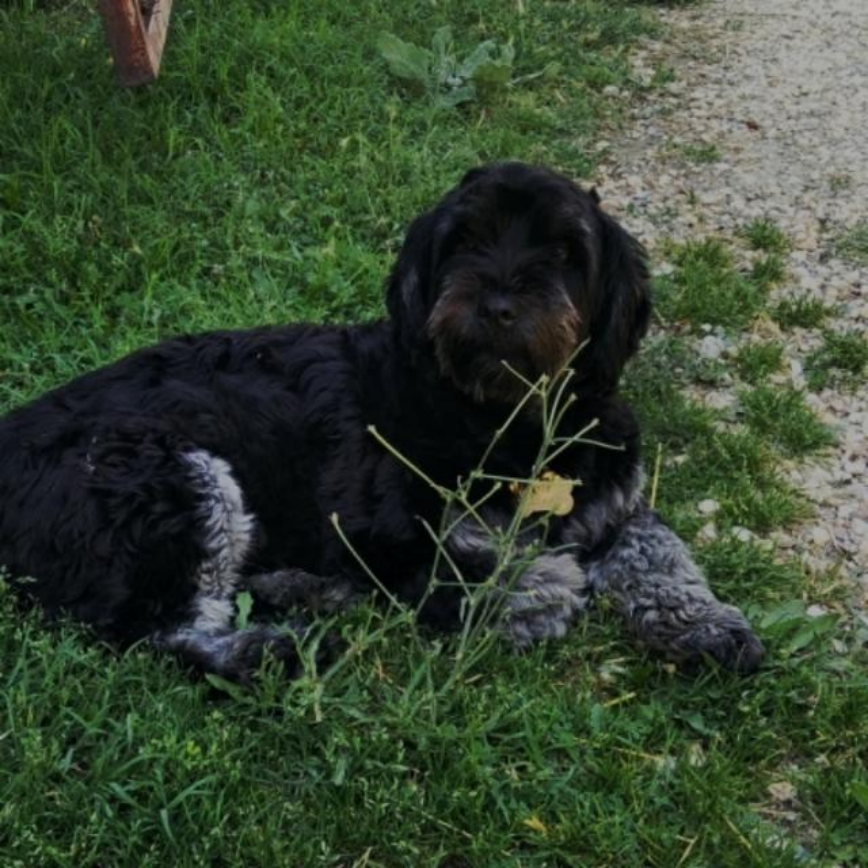
“Gece.”
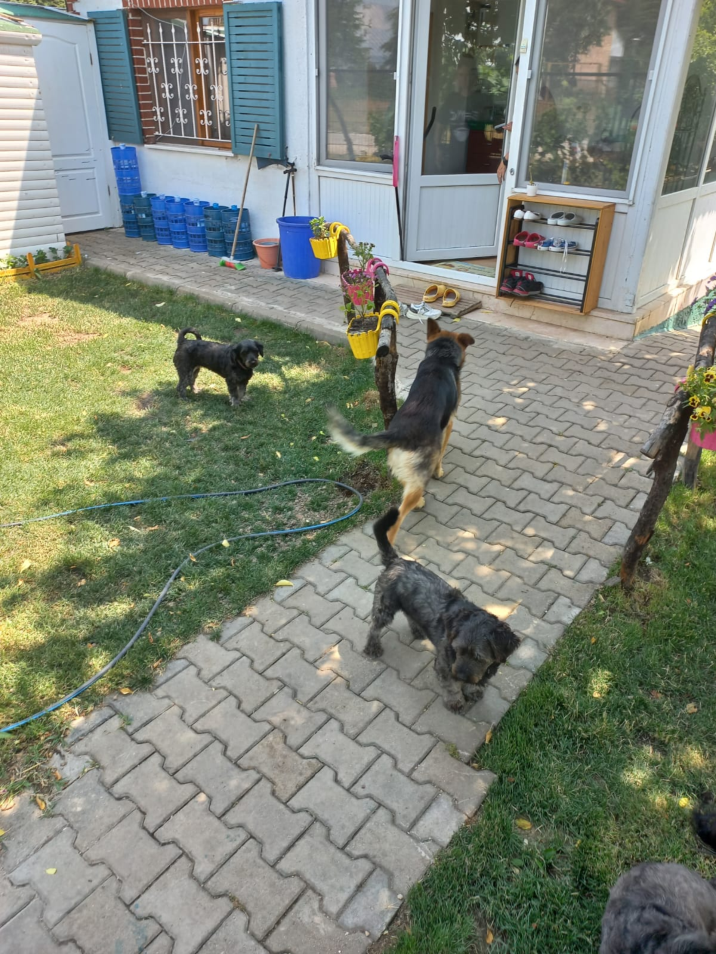
“The gang.”
“The latest arrival.”
Document