Basque Country and Local Governance
EN
- Public Administration
- Political Economy
- Nationalism
An examination of the Basque Country’s local governance, fiscal autonomy, and regional development. Drawing on Marxist, pluralist, and Weberian-institutionalist perspectives, the paper explores how self-government shapes economic inequalities, regional identity, and relations with the Spanish state.
Preface
I’ve organized the paper into two main parts to explore the Basque Country. The first section offers an empirical summary of the current literature, focusing on the region’s institutional setup and overall development. The second part, the “Discussion,” is where I aim to make my own original contributions.
Introduction
The Basque Country, called el País Vasco in Spanish besides Euskal Herria in Basque, is a distinct cultural and geographical area that lies across the western Pyrenees between France and Spain. The Basque people are often seen as one of Europe’s oldest native groups.
Archaeological work shows that the Irulegi settlement began in the Middle - Late Bronze Age (15th - 11th centuries BC). Later finds at the same site include a Vasconic inscription linked to early Basque and the first clear linguistic evidence appears by the 10th century (Aiestaran et al., 2024). The region’s high mountains have long acted as a physical barrier but also as a space where culture developed on its own allowing a unique identity to survive. Chief among its marks of identity is the Basque language, Euskara. This pre-Indo-European tongue stands alone - no clear link to any other language family has been found. Scholars continue to study it and it serves as a strong sign of Basque distinctiveness (Heywood, 1995, p. 285).
Figure 1
Flag of the Basque Country (Ikurriña).
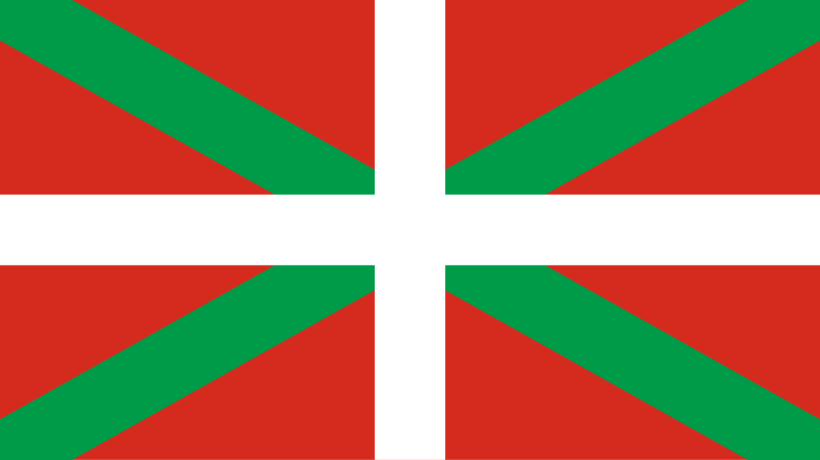
Note. Flag of the Basque Country (Ikurriña). D. Schirmo (Frankie688), via Wikimedia Commons, licensed under CC BY-SA 2.5. Adapted for web display; this version is shared under the same licence.

Although the wider cultural and historical region of Euskal Herria stretches across both sides of the Pyrenees, this paper focuses on the Spanish Basque Country, the Comunidad Autónoma del País Vasco (Autonomous Community of the Basque Country), which has official legal recognition within the Spanish state. This focus matters because the political status of Basque territories differs sharply across the international border. In France, the Basque area consists of three historical provinces known collectively as Iparralde, or the Northern Basque Country, and it does not have autonomous institutional status. The French central government offers only limited cultural recognition, while permitting bilingual signage and some language education. At the same time, the French Basque region remains far from the broad self-governing powers held by its Spanish counterpart.
Figure omitted from the web edition; see the original PDF.
Within Spain, the Basque Autonomous Community is often seen as one of the most autonomous regions in the country’s territorial system alongside with Navarre, especially because of its strong fiscal capacity. Its distinctive position rests on the Concierto Económico, a special fiscal arrangement that dates back to the late nineteenth century and was reestablished after Franco’s death. Under this system, the Basque government can collect its own taxes and then remit only an agreed quota to Madrid (Zubiri, 2010, p. 21). This privilege, shared only with Navarre, places the Basque Country in a unique position within Spain’s system of asymmetric privilige, where different autonomous communities hold different degrees of self-government (Zubiri, 2010, p. 108). The arrangement does more than creating economic autonomy. It also gives concrete form to a historical claim of distinct political status rooted in the ancient fuero 1 system of local rights.
This paper examines the Basque Country’s local government system through several analytical lenses, guided by one central question: how does sub-state prosperity shape, and become shaped by, institutional autonomy within a nation-state? The analysis unfolds across five connected sections. The first section sets out the historical context, tracing the region’s shift from a largely rural society to an industrial powerhouse in the late nineteenth century. It considers commercial ties with Britain, the difficult relationship with the Francoist dictatorship, and the negotiated route to autonomy after Spain’s democratic transition. It also discusses how the region developed into a major cultural and economic center. The second section turns to legal and institutional structures. It looks at the Basque Autonomous Community’s constitutional status and maps the scope of its legislative and executive powers as defined by the Spanish Constitution of 1978 and the Basque Statute of Autonomy of 1979 (Heywood, 1995, p. 44). Here, particular attention is given to the three-tier governance structure, which includes the regional parliament (Eusko Legebiltzarra), the provincial councils (Diputaciones Forales), and municipal governments in the three capital cities:
Vitoria-Gasteiz, Bilbao, and Donostia-San Sebastián (Historical Territories Law, 1983).
Third, the fiscal and economic analysis presents empirical data on the region’s material conditions, including gross domestic product, purchasing power parity, per capita income, quality of life indicators, and human development indices. This quantitative portrait establishes the economic foundation upon which the subsequent theoretical discussion rests.
Fourth, the paper examines participatory and democratic dimensions of local governance, assessing mechanisms for citizen engagement, satisfaction with participatory channels, and the extent to which local demands translate into institutional outcomes. Finally, the discussion section discusses the Basque country under the lens of the three theoretical frameworks, interspersed with personal observations from an Erasmus exchange. From a Marxist perspective, David Harvey’s concept of uneven development is operationalized at both micro and macro scales: the micro-level analysis considers how Bilbao’s transformation into a cultural consumption hub has affected local populations, while the macro-level analysis interrogates the fiscal asymmetries between the prosperous Basque region and Spain’s poorer southern territories. A pluralist perspective evaluates whether autonomy has enhanced identity preservation and deepened local democracy or generated new hierarchies centered on regional elites. Finally, a Weberian-institutionalist lens examines center-periphery tensions, questioning whether Basque autonomy challenges or coexists with the nation-state’s claim to territorial integrity and unified sovereignty.
Part I: The Literature on the Basque Country
Historical Formation of the Basque Country
The Basque Country holds a singular place within the Spanish state, shaped by a legal status that is unusual not only within the Iberian Peninsula but also across the developed world (Zubiri, 2010). This exceptionalism draws on historical Foral rights. These rights are not just symbolic remnants of the past. They function as the core foundations of the region’s modern fiscal and administrative autonomy. When these ancient rights overlap with modern constitutional law, they produce a unilateral risk environment, which is a defining feature of the Basque financial model.
In this model, the Historical Territories take on the full risk of tax collection. They benefit from surpluses when the economy grows, and they carry the entire burden of deficits during downturns. This setup sets the Basque Country apart from the Common Regime autonomous communities. Those regions depend on a centralized revenue-sharing approach that is based on estimated needs rather than on direct fiscal capacity. The 2008 and 2009 financial crisis offers a clear example of how this works. When national revenue fell sharply, the Basque Quota also decreased, regardless of the region’s own fiscal performance. This outcome captures the unilateral risk-and-reward mechanism in practice (Zubiri, 2010). Even so, these modern competencies make sense only when we trace how they developed from the medieval origins of the region’s relationship with the Crown of Castile.
The institutional identity of the three provinces, Alava, Biscay, and Guipuzcoa, began to crystallize following their integration into the Crown of Castile between the 13th and 14th centuries. While Alava was integrated after Castilian troops took Vitoria in 1200, a distinct historical nuance involves the Cofradía de Arriaga, a mixed assembly of nobles and clergy that voluntarily handed over the rest of the territory to the Crown in 1332 (Zubiri, 2010).
Similarly, the definitive integration of the Lordship of Biscay in 1379 occurred when Juan I inherited the title of Lord of Biscay while serving as King of Castile. Throughout this period, the provinces maintained their traditional Fueros, or charters, which granted the territories a high degree of administrative autonomy and territorial law. These charters provided significant fiscal and military exemptions, ensuring that the Basque territories were largely self-governing entities within the Castilian monarchy. A critical mechanism of this autonomy was the Pase Foral, or Foral Approval, which functioned as a veto power allowing local institutions to disregard royal mandates if they were deemed contrary to the established Fueros. Furthermore, the existence of inland customs effectively turned the Basque Country into a free trade area, as the borders for Spanish duties were located on the frontier between Castile and the Basque provinces rather than at the coast, facilitating early commercial differentiation from the rest of the monarchy. The clash between this traditional Foralism and the rising tide of 19th-century Liberalism eventually culminated in the Carlist Wars, leading to the definitive abolition of the Fueros in 1876.
The abolition of 1876 did not simply bring a set of conflicts to an end. It also created a legal vacuum. In the middle of the region’s early industrial surge, this vacuum required a rapid institutional response to avoid a broader economic collapse. The result was a strategic move away from full Foral rights and toward the Economic Agreement, or Concierto Económico, introduced in 1878. Although it was first presented as a temporary measure to integrate the provinces into the national treasury, the system still left the Historical Territories with substantial fiscal control. They could collect their own taxes and then pay a Quota to the central government.
This period also coincided with the Basque Country’s rise as an industrial powerhouse. It was driven by the rapid expansion of iron and steel, illustrated by major actors such as Altos Hornos de Vizcaya. Growth was strengthened further by close commercial ties with Britain, which became a key market for Basque mineral exports (García de Cortazar & Montero, 1983). Overall, this model helped the Basque economy adjust to a capitalist, industrial framework while keeping the institutional capacity to manage local resources. This development continued into the 1930s. At that point, the short-lived Statute of Autonomy of 1936 sought to formalize Basque self-government, but it was abruptly and violently cut short by the outbreak of the Spanish Civil War.
The victory of the Francoist forces in 1939 resulted in a severe suppression of Basque autonomy and a significant crisis of regional identity. Labeling Biscay and Guipuzcoa as traitor provinces for their resistance during the Civil War, the Franco dictatorship abolished their Economic Agreements, effectively abolishing their fiscal self-management. In a strategic move of political favoritism, Alava was permitted to retain its fiscal system because it had supported the military uprising from its beginning. (Zubiri, 2010). This period was characterized by state-driven cultural suppression and the symbolic devastation of the bombing of Guernica, an event that became a central emblem of Basque suffering. The repression of Basque language and institutions created a deep-seated sense of political grievance, establishing a causal link between this era of state violence and the subsequent emergence of the militant group ETA. The death of Franco in 1975 finally opened the door for a democratic transition and the subsequent restoration of the region’s historical rights.
The modern legal framework took shape through two key steps: the First Additional Provision of the 1978 Spanish Constitution, which explicitly protects the historic rights of the foral territories, and the 1979 Basque Statute of Autonomy, which enabled the region to recover wide-ranging competencies. These included control over infrastructure and the creation of the Ertzaintza regional police force (Basque Statute of Autonomy, 1979; Spanish Constitution, 1978). A decisive moment for modern Basque solvency came with the 1981 Concierto Económico. It established a comprehensive fiscal system in which the Historical Territories collect almost all general taxes (Ley 12/2002, 2002). Within this framework, revenue is allocated through a Vertical Model of distribution. In other words, funds are redistributed inside the Basque Country from the Historical Territories to the Basque autonomous institutions. This supports stable financing for shared services while keeping provincial tax authority intact. Together with the cupo 2 settlement with the central state, the Concierto framework creates a distinctive fiscal compact that has become central to the region’s modern financial resilience (Zubiri, 2010).
The Basque financial architecture is based on the central role of the Foral Representations (Provincial Councils), which are responsible for collecting taxes and then managing Institutional Obligations for transfer to the Basque Government and municipalities (Zubiri, 2010, p. 71). The cornerstone of this agreement is the “Quota” system, calculated using an assignment index of 6.24%, in basic words, “ The Basque Country covers approximately 6.24% of the center’s specific expenses .” This rate represents a strategic political compromise between the region’s relative income of 7.5% and its population share of 5.66% at the time it was determined, rather than a purely technical calculation (Zubiri, 2010, p. 64). Remarkably, although the Basque region’s share of the Spanish population has decreased to 4.69% over time, this index has been kept constant, preserving the historical continuity of the system (Zubiri, 2010, p. 65). The legal safeguards of the system reached a turning point with the 2010 reform known as “blindaje,” which granted “Law” status to local tax regulations (Normas Forales), protecting them against appeals by lower courts and safeguarding the region’s financial autonomy against judicial uncertainty (Zubiri, 2010, p. 59; Zabalza & López-Laborda, 2014, p. 22).
Figure omitted from the web edition; see the original PDF.
Summary Table :
| Period/Era | Key Legal Instrument | Institutional Impact/Outcome |
|---|---|---|
| Foral Period (1200-1876) |
Medieval Fueros (Charters) |
Administrative and judicial autonomy, fiscal/military exemptions, and inland customs. |
| Transition (1876-1878) |
Abolition Law of 1876 | End of medieval exemptions, creates a legal vacuum filled by the first Economic Agreement. |
| Industrial Era (1878-1936) |
Concierto Económico (1878) |
Fiscal autonomy maintained during rapid industrialization and rise of steel industry. |
| Franco Dictatorship (1939-1975) |
Abolition Decrees (1937) |
Loss of autonomy for Biscay and Guipuzcoa, Alava maintains its Agreement. |
| Democratic Transition (1978-1979) |
Spanish Constitution & Statute of Autonomy |
Restoration of historic rights and transfer of major service competencies. |
| Modern Era (1981-Present) |
1981, 2002, & 2010 Agreements |
Full tax collection power, indefinite duration (2002), and legal shielding or “blindaje” (2010). |
Legal and Institutional Framework of Basque Autonomy
Constitutional Foundations and the Restoration of Foral Rights
The strategic importance of the “First Additional Provision” of the Spanish Constitution of 1978 lies in the role it plays as the main legal foundation for Basque asymmetry. It works as a bridge between medieval foral tradition and modern democratic federalism. This provision does more than recognize regional particularity. It explicitly “protects and respects the historic rights of the territories with traditional Fueros,” (Spanish Constitution, 1978, Additional Provision 1), and in doing so it opens a formal route to a distinct legal and administrative regime. By linking present-day governance to these older charters, the Spanish state created a form of dual constitutional legitimacy. This helped reconcile the historical sovereignty claims of the Basque territories with the unity of the 1978 constitutional order. In practice, the provision supported a restorative approach to Basque rights rather than a transformative one.
It effectively reestablished an institutional identity that had been constrained under the centralist homogenization of the Franco era.
The contemporary manifestation of this foral logic rests upon the dual pillars of the Spanish Constitution of 1978 and the Basque Statute of Autonomy of 1979. Collectively, these instruments codified the “Foral System,” a framework fundamentally distinct from the common administrative regime applied to the majority of Spain’s autonomous communities.
Unlike the common regime, which operates on a principle of delegated authority and state-wide fiscal harmonization (Zabalza & López-Laborda, 2014), the Foral System recognizes the Historical Territories as the primary subjects of fiscal and administrative sovereignty (Basque Statute of Autonomy, 1979; Spanish Constitution, 1978). As Zubiri (2010) elucidates, this arrangement represents the continuity of a historical trajectory wherein the Basque territories maintained significant administrative autonomy and fiscal independence, even within the broader Spanish monarchy. However, a critical legal nuance persisted: until the legislative amendment in 2010, the specific tax regulations of the Basque provinces, known as Normas Forales, held a lower legal status than state-level laws. This hierarchical discrepancy meant that Basque fiscal policy was repeatedly challenged in lower-level Contentious Administrative Courts. It created a period of legal instability. The situation was resolved only when these norms were given the rank of Law, making them triable only before the Constitutional Court (Zubiri, 2010; Zabalza & López-Laborda, 2014).
The Architecture of Multi-Level Governance
The decentralization of the Basque administrative structure is not simply a bureaucratic choice. It is presented as a strategic requirement for regional stability, and it reflects the distinctive historical identity of the Basque provinces within a modern state. This multi-level model is meant to avoid the rise of a single, dominant regional authority that could weaken the foral traditions of the individual territories. In practice, governance operates through a three-tier structure that includes the Regional Parliament (Eusko Legebiltzarra), the
Provincial Councils (Diputaciones Forales), and the municipal governments of major
urban centers such as Vitoria-Gasteiz, Bilbao, and Donostia-San Sebastián (Historical
Territories Law, 1983). Within this division of responsibilities, the regional level oversees the broad social pillars of health and education, while provincial and municipal levels handle more localized social services and infrastructure. To keep these layers aligned, the Tax Coordination Body (Órgano de Coordinación Tributaria) provides a key forum for voluntary harmonization. It aims to ensure that, even as each province retains fiscal sovereignty, policies do not drift so far apart that they produce regional fragmentation.
The “confederal” nature (Zubiri, 2010; Zabalza & López-Laborda, 2014) of the Basque Country Autonomous Community is most visible in the continued primacy of the Historical Territories of Alava, Biscay, and Guipuzcoa; as the main units of political and economic agency. Each province has its own Parliament (Juntas Generales) and its own executive body (Diputación Foral). In this setting, the regional Basque Government functions more as an overall coordinator than as a centralizing superior. Provincial autonomy is also protected through institutional rules. For example, each territory elects the same number of representatives to the regional Parliament despite major population differences, which helps preserve a balance of power. At the same time, the system includes safeguards to reduce the risks of such decentralization. One of these is the “General Fund of Adjustment,” which supports horizontal stability by ensuring that each territory reaches at least 99% of its horizontal coefficient 3 (Zubiri, 2010). This helps prevent any single province from falling below a minimum level of fiscal viability compared to the others. Overall, this institutional design frames the Basque public sector as operating through cooperation and mutual surveillance between the provinces and the regional executive.
The Fiscal Privilege: Analysis of the Concierto Económico Fiscal sovereignty constitutes the ultimate expression of Basque political autonomy, establishing a global precedent where the central government lacks the authority to collect direct taxes within the region (Ley 12/2002, 2002; Basque Statute of Autonomy, 1979). The Spanish State collects a limited set of non-concerted revenues in the Basque Country, leaving the “power of the purse” mostly in provincial hands. The mechanics of the Concierto Económico (Economic Agreement) center on the “Quota” ( Cupo ), a negotiated payment made to the Spanish State for non-assumed competencies, such as defense and foreign affairs (Ley 12/2002, 2002). Critically, this Quota is not merely a fee for services; it includes a legally mandated “contribution to the solidarity among regions,” (Spanish Constitution, 1978), fulfilling a constitutional requirement for inter-territorial equity (Zubiri, 2010). The calculation relies on an “imputation index,” currently set at 6.24%. While this figure aligns with the region’s relative income today, it originated as a 1981 political compromise between the relative income (7.5%) and relative population (5.66%) of the time (Zubiri, 2010), illustrating that the index is a negotiated political-legal tool rather than a static economic derivative.
The system is defined by “Unilateral Risk,” where the Basque administration bears the full financial consequences of tax fluctuations, retaining surpluses but lacking recourse to state bailouts (Zubiri, 2010, pp. 70, 93). This risk was evident during the 2008 crisis when the Quota fell by half, driven not by Basque performance but by the collapse of Spanish State tax collection, upon which the Quota’s updating index is based (Zubiri, 2010, p. 66). This creates an asymmetry where Basque finances remain linked to State fiscal health (Zubiri, 2010, p.
70). Furthermore, the legal tension between fiscal autonomy and the “principle of no distortion” (Zubiri, 2010, p. 53) sparked litigation regarding “regional selectivity,” which the European Court of Justice resolved by establishing criteria for institutional, procedural, and financial autonomy (Zubiri, 2010, pp. 113-115).
Executive Competencies and Public Policy Execution
The strategic control over core social pillars, specifically health, education, and security, is the cornerstone of Basque governance, predicated on the belief that localized management optimizes efficiency and public trust. By managing these services directly, the Basque government has successfully tailored public policy to the demographic and cultural specificities of its population. A primary example is the Ertzaintza (Basque Police), which serves as a “comprehensive” security force (Basque Statute of Autonomy, 1979). Unlike police forces in typical federal states that merely supplement national authority, although certain divisions of competences remain, the Ertzaintza has largely replaced national functions in the region, an institutional rarity that underscores the depth of Basque executive competence.
Resource distribution follows a “Vertical Model” (Zubiri, 2010, p. 74). Over time, this model has been refined as autonomy deepened and government responsibilities shifted. In practice, the Basque Government receives the largest share of the pool of “common resources” collected by the provincial Diputaciones. This share is set through the “Vertical Coefficient” (Zubiri, 2010, p. 75). The funds remaining after this regional allocation are then divided within the provincial level and passed on to municipalities. Part of this transfer happens through designated municipal funds financed by the provinces (Zubiri, 2010, p. 76). The arrangement is not treated as permanent. It is reviewed periodically, usually on a five-year timetable through Contribution Acts, so that the sharing rules stay aligned with what each level of government is expected to deliver (Zubiri, 2010, p. 73). In this sense, the system aims to match competencies and spending needs across tiers. It updates the balance when functions expand, contract, or are reassigned (Zubiri, 2010, p. 74).
Comparative Summary of the Foral System
To synthesize the complex legal-fiscal framework discussed, the following table provides a structured overview of the responsibilities and legal foundations governing each level of the Basque institutional structure.
| Governance Level/Element |
Core Responsibility | Legal/Fiscal Basis |
|---|---|---|
| Spanish State | Non-assumed charges (Defense, Foreign Relations, Solidarity Contribution) |
Spanish Constitution (1978); Economic Agreement (Quota) |
| Basque Government |
Education, Health, Comprehensive Security (Ertzaintza) |
Statute of Autonomy (1979); Historical Territories Law (1983) |
| Provincial Councils |
Tax collection, Social services, Road infrastructure |
Economic Agreement Act (Sec. 4.2); Historical Territories Law (1983) |
| Municipalities | Local services (Sanitation, Water, Urbanism) |
Historical Territories Law (1983); Foral Municipal Funds (FMF) |
Fiscal and Economic Analysis: Empirical Data
Macroeconomic Fundamentals: GDP, PPP, and Per Capita Income
The Basque Country’s macroeconomic position shows a clear resource advantage compared with the Spanish national average. Empirical evidence suggests that in 2007, the region’s GDP per capita was €30,419. This was 30.6% higher than the Spanish mean (Zabalza & López-Laborda, 2014, p. 28). This income gap places the Basque Country not only ahead within Spain, but also among high-income territories by European standards. At the same time, the fiscal data tells a more complex story. In the base year, the Basque Country had far more public resources per person than the average, with an “excess” of 109.1%. However, only 61.1% of this difference could be explained by the extra spending duties that the foral institutions are responsible for (Zabalza & López-Laborda, 2014). This matters because most other regions in Spain do not have this kind of financial room. They mainly rely on a centralized system, where part of their funding comes from national taxes and equalization transfers. As a result, the Basque Country’s unusually strong resource base helps support the higher levels of human development and quality of life seen in the region.
Indicators of Human Development and Social Infrastructure
Human capital and digital infrastructure are the key elements that distinguish the Basque Country. These assets allow the region to sustain its competitive edge in the global economy.
Recent data shows that the percentage of the population aged 25 to 64 with at least tertiary education is among the highest-performing OECD regions, exceeding 50% as of 2022 (OECD, 2025). Furthermore, the region has demonstrated notable labor market resilience, as evidenced by the long-term unemployment incidence recorded in 2023 (OECD, 2025). In modern literature, digital infrastructure is considered not merely a technical capability, but a strategic development indicator that determines a society’s capacity to integrate into the knowledge economy, its innovation potential, and its level of socio-economic development 4 (World Bank, 2016; OECD, 2020; Castells, M. 2010). Digital connectivity also points to how prepared the region is for a technology-driven, globalized economy. One way to see this is through average fixed-line internet download speeds in 2023. At roughly 248 to 750 Mbps, these speeds are not only a matter of convenience. They are a basic condition for a resilient digital economy (OECD, 2025).These figures support a broader strategy to keep the region competitive and high-income over the long term. High educational attainment and strong digital readiness work as lasting advantages. In this respect, the region performs well above the OECD regional average of 83%. Its mean fixed-connection download speed in 2023, around 248-750 Mbps, also exceeds the Spanish and OECD averages of 211-360 Mbps and 172-230 Mbps, respectively.
This developmental success is fundamentally rooted in the region’s unique fiscal powers:
allowing such high levels of public investment.
The Fiscal Framework: The Economic Concert (Concierto Económico)
The primary engine of regional fiscal autonomy is the Foral System, specifically regulated through the Economic Concert, or Concierto Económico. Under this framework, the Basque Country possesses an unparalleled degree of tax decentralization, managing almost all taxes accrued within its territory, including Income Tax, VAT, Excises, and Corporate Tax (Zabalza & López-Laborda, 2014). The system operates through an imputation procedure where the region pays a “Cupo,” or exaction, to the central government to cover services not transferred to the regional level. This fiscal framework has a profound impact on regional stability, yet the imputation procedure remains a point of scholarly debate because it tends to bias the scales in favor of foral communities. Indeed, the unjustified excess of resources, estimated at 29.8%, is largely a result of the specific imputation coefficients used to determine the Basque contribution (Zabalza & López-Laborda, 2014, p. 23). This strong fiscal capacity translates into a territorial approach to development that allows the region to outrun national averages consistently and maintain a high degree of internal social cohesion through targeted public expenditure.
Comparative Regional Prosperity and Global Context
The experience of the Basque Country aligns with broader macroeconomic theories regarding the impact of decentralization in high-income nations. Research indicates that the successful transfer of authority and resources to subnational tiers is highly contingent on the existing level of development and the redistributive capacity of the state (Rodríguez-Pose & Ezcurra, 2010). In developed countries such as Spain, decentralization is often linked with a reduction or stabilization of regional inequality, whereas in medium-to-low-income nations, such as Thailand or Brazil, fiscal decentralization has been associated with a significant rise in territorial disparities (Rodríguez-Pose & Ezcurra, 2010). The Basque experience illustrates the emergence of a “new state space,” where regional authorities effectively leverage their unique resource positions to outperform national averages and establish themselves as wealthy, state-like entities. One may argue that the Basque Country serves as a premier example of how regional authority, when applied in a developed context, can successfully manage fiscal tools to secure a position of global economic prominence while avoiding the territorial fragmentation often observed in developing economies.
Summary of Observable Statistical Indicators
| Indicator | Value/Statistic | Year/Source | Comparison |
|---|---|---|---|
| GDP Per Capita | €30,419 | 2007 (Zabalza & López-Laborda, 2014) |
30.6% above Spanish mean |
| Tertiary Education Rate |
Exceeding 50% | 2022 (OECD, 2024) | Among highest OECD performers |
| Internet Download Speed |
248-750 Mbps | 2023 (OECD, 2024) | Competitive digital readiness, exceeding Spanish and other OECD countries’ means |
| Long-term Unemployment |
Competitive labor market |
2023 (OECD, 2024) | Relative to national mean |
| Tax Management Scope |
Income, VAT, Excises, Corporate |
2014 (Zabalza & López-Laborda, 2014) |
Maximum subnational autonomy |
| Unjustified Fiscal Excess |
29.8% | 2014 (Zabalza & López-Laborda, 2014) |
Relative to common communities |
Local Democracy and Participation in the Basque Country
Institutional Architecture for Citizen Engagement
The Basque Country’s distinctive autonomy has made it possible to build participatory infrastructure that goes beyond what is typical in Spanish municipal practice. In Gipuzkoa, Provincial Law 5/2018 on Citizen Participation sets out clear legal rights for citizens to take part in local governance (OECD, 2024). It also requires public bodies to create participation structures and gives a legal basis for deliberative methods, including civic lotteries (OECD, 2024). Unlike participation laws that mainly state broad intentions, this legislation places concrete institutional duties on authorities rather than relying on abstract principles.
The Provincial Citizen Participation Programme, run by the General Directorate for Citizen Participation, supports and coordinates participatory practices across Gipuzkoa’s municipalities. It offers technical assistance and methodological guidance (OECD, 2024).
This matters because it builds a permanent administrative capacity, rather than depending on short-term consultation committees that are more common in Spanish local government.
Some municipalities, including Tolosa, have also appointed dedicated participation officers.
The Tolosa Citizens’ Assembly: Deliberative Democracy in Practice
Tolosa’s 2022 Citizens’ Assembly offers the clearest empirical example of participatory innovation in the Basque Country. The assembly brought together thirty-two randomly selected residents. They met across five day sessions, totaling forty hours, to discuss how Tolosa Council could improve health and emotional wellbeing through public-community collaboration (OECD, 2024). Participants were chosen through a two-stage civic lottery. First, fifteen thousand invitation letters were sent out. Then the final group was stratified by gender, age, residence, and education to ensure demographic representativeness (OECD, 2024; Tolosa City Council, 2022).
The Tolosa Citizens’ Assembly followed three phases. It began with a learning stage supported by expert presentations. It then moved to deliberation, where participants took part in structured dialogue. Finally, the group drafted proposals (OECD, 2024, p. 3). A similar method was later used at a wider scale. In the Gipuzkoa Climate Assembly, 32 participants discussed agricultural policy and the climate emergency and produced nine proposals (OECD, 2024, p. 2). A key step was the public follow-up. The Regional Assembly issued a public response in March 2023, explaining which proposals would be adopted and why, and it shared implementation updates in November 2023 (OECD, 2024, p. 2).
Quantitative Assessment and Democratic Performance
An evaluation by the University of the Basque Country (UPV) found that participants valued the diversity of perspectives, the quality of facilitation, and the chance to make a meaningful contribution (OECD, 2024, p. 4). Participants also reported higher trust in citizen participation mechanisms, deliberative processes, and political representatives (OECD, 2024, p. 4). The process created positive spillover effects as well. It reached more than two hundred people and helped strengthen a broader culture of deliberation (OECD, 2024, p. 4). At the same time, the OECD evaluation pointed to communication problems. It was not always easy to explain the process and its outcomes to people who did not take part (OECD, 2024, p. 4). This suggests that even well-run deliberation may not build wider legitimacy if the broader public remains unaware or skeptical (OECD, 2024, p. 4).
The OECD Deliberative Democracy Database (2023) catalogues 733 representative deliberative processes worldwide (1979-2023). While the database does not provide a formal ranking of regions, OECD work on the Basque Country highlights early and repeated use of deliberative processes in Spain, including Gipuzkoa, and discusses pathways to make deliberation more systemic.
The OECD report deems the implementation of the Assembly of Tolosa as a “good practice.”
(2024). Gipuzkoa provincial and Tolosa municipal ordinances specify procedural requirements, define participation modalities including sortition. (Tolosa City Council, 2022).
The municipal document of Tolosa outlines a municipal organizational structure that uphelds and values grass-roots participation.
In a way, one may conclude that the Basque region, alongside with its municipal and local institutions exemplify a suitable environment for local participation to the local, as well as national and global politics by projecting the citizens to be aware of current issues and inducing them to have a say in the implementation processes.
Persistent Challenges
The Basque Country confronts difficulties in scaling participation beyond small samples, communicating outcomes to broader publics, integrating recommendations into conventional policy cycles, and addressing structural inequalities that participatory processes alone cannot resolve (OECD, 2024). Font notes that countrywide, participation in neighborhood councils and residents’ associations remains socioeconomically stratified, with working-class and immigrant-origin populations participating at lower rates due to unequal distribution of resources and organizational biases (2002). While deliberative assemblies create temporary spaces of descriptive representation through random selection, surrounding participatory infrastructure continues reproducing familiar biases where organized groups dominate over individual citizens (Font, 2002). While Font’s (2002) preface is not meant specifically for the Basque case, one should be careful in terms of encountering the very same issues in local politics. However, survey research conducted by Franco and Wilson (2022), shows that the Basque citizens express relatively high satisfaction with regional government performance and life satisfaction.
Part II: Discussion on The Basque Experience in Marxist, Pluralist, and Weberian-Institutionalist Paradigms
Introducing the concepts
To understand the Basque Country’s distinctive institutional and economic path, it is not enough to rely on empirical description alone. A stronger analysis needs further theoretical framework. This discussion therefore uses three paradigms that offer different ways of thinking about power, state rationality, and social organization: Pluralism, Weberian Managerialism, and Marxism. Tarık Şengül (2009) places these approaches within urban political literature through a basic tension. On one side, the liberal tradition sees the city and local context as spaces where consensus can be built. On the other, the critical tradition treats them as arenas shaped by structural contradictions.
The pluralist paradigm argues that political power is not concentrated in a single ruling class or elite. Instead, it is spread across different interest groups, associations, and social movements. From this view, the city and local context form a democratic arena where actors bargain and compete, and political outcomes emerge through compromise rather than domination (Şengül, 2009). Pluralism also carries a normative assumption: citizens know their interests and have relatively equal access to political institutions. As a result, government is understood as a neutral arbiter that gathers competing demands and keeps the system in balance. Applied to the Basque Country, pluralism raises a clear question. Has autonomy genuinely strengthened deep local democracy and identity preservation through participatory channels, or does it mainly manage competition among organized interests?
The Weberian Managerialist paradigm shifts attention away from social groups and toward the state apparatus itself. It emphasizes bureaucracy and rational-legal authority as key sources of power. Şengül describes this as an institutional-managerialist tradition. It argues that modern domination works through professional organizations and that power often lies with “managers,” technical experts, and bureaucrats who control information and shape agendas (Şengül, 2009). The logic here is that complex urban problems require expert knowledge and hierarchical coordination to maintain efficiency and order. In this frame, the state is not a neutral referee. It is an integrated institutional system with its own internal rationality. A Weberian reading of the “confederal” character of the Basque arrangement would therefore focus on how strong administrative capacity and fiscal sovereignty operate alongside the central Spanish state’s claim to territorial integrity, and how this relationship is managed through technical-bureaucratic rationality.
The Marxist paradigm rejects both the pluralist idea of dispersed power and the Weberian emphasis on bureaucratic neutrality. It argues instead that the state is fundamentally a condensation of class relations, structured to secure the long-term interests of capital. Şengül notes that, from this perspective, the city is not simply a residential unit. It is a spatial expression of capital accumulation and class contradictions (Şengül, 2009). Marxist rationality centers on the mode of production and class struggle. Urban space is not treated as a neutral container, but as a commodified product shaped by the pressures of crisis and overaccumulation. In this frame, the goal is to show how institutional arrangements, including Basque fiscal autonomy, may support the reproduction of labor power (Şengül, 2009) and intensify uneven development rather than serving a general public good. Marxism therefore asks about the material foundations of Basque prosperity. It questions whether fiscal privileges and urban transformation projects function as a “spatial fix” that ultimately deepens territorial inequality within Spain.
The Marxist Inquiry: Uneven Development in Micro and Macro Levels
A Marxist perspective helps explain why the Basque Country can look like a high-performing “model” of autonomy and, at the same time, a place where new inequalities are being produced. Instead of treating prosperity as a neutral result of better institutions, this approach asks how fiscal capacity, urban strategy, and labour-market segmentation work together to secure a specific pattern of accumulation. In David Harvey’s terms, capitalist development tends to generate “uneven development.” It concentrates investment and opportunity in some places while shifting costs and risks onto others. These spatial outcomes are not accidental.
They are linked to how capital and the state manage crisis, competition, and profitability over time (Harvey, 1982). The Basque case is especially revealing because it shows how a territorially strong public sector can intensify this unevenness even while improving average welfare indicators.
At the macro level, the Basque fiscal regime increases regional room for local implementations and interventions within Spain’s multilevel system. The Economic Agreement framework gives Basque institutions unusual control over revenue collection and spending choices. This allows the regional state to sustain policy continuity and investment strategies that would be harder under the common financing model (Zubiri, 2010). A Marxist reading does not deny the administrative effectiveness of this autonomy. However, it emphasizes that fiscal architecture also shapes distributional conflict and territorial hierarchy.
(Zabalza & López-Laborda, 2014). This matters because it ties autonomy to a structural asymmetry: the Basque Country possesses an uneven advantage of fiscap capability compared against the other 16 autonomous regions of Spain. The Basque Country can consolidate the benefits of participation in the wider state and single market while standing on a stronger fiscal platform than many regions with similar responsibilities. Recent political-economy analysis of Spanish regional financing also finds that asymmetric fiscal autonomy can widen regional disparities, with the Basque case standing as a high-performing unit against persistently underfunded regions (Aparicio-Pérez et al., 2025). In Marxist terms, the key issue is not only “who gets more.” It is how a territorially strong fiscal state can stabilize an accumulation strategy that weaker regions struggle to replicate, which reproduces uneven development at the scale of the state.
This macro advantage becomes visible when urban and regional restructuring, where public authority actively remakes space to attract capital, visitors, and high-value services. Bilbao’s post-industrial transformation is often told as a story of renewal and global visibility. A Marxist analysis, however, treats the city as a place where investment decisions reshape land values, everyday life, and class relations. Research on metropolitan Bilbao shows that since the mid-1980s the policy agenda shifted toward competitiveness and large-scale redevelopment, and this shift also produced socio-spatial fragmentation (Rodríguez et al., 2001). The Guggenheim-centred rebranding strategy helped reposition Bilbao within global cultural circuits. At the same time, it contributed to making certain neighbourhoods more “gentrifiable,” especially areas near the renewed core such as Bilbao La Vieja (Vicario & Martínez Monje, 2003). These patterns fit Harvey’s broader argument that urban redevelopment can act as a spatial strategy to absorb capital and restore profitability.
Meanwhile, social costs are often pushed onto renters, peripheral neighbourhoods, and workers whose livelihoods depend on low-wage urban services (Harvey, 1982).
Tourism and the service economy are central to how this spatial strategy reshapes labour.
Employment growth at the aggregate level can still coincide with new forms of precarity when expansion depends on sectors with lower bargaining power and weaker wage dynamics.
A recent report on Euskadi notes that tourism-sector employment averaged 114,679 workers affiliated to Social Security in the last quarter of 2024. This equals 11.3% of all affiliates in the Basque economy, and hospitality alone accounts for 72,067 workers (Cadena SER, 2025).
Figures like these show that the visitor economy is structurally embedded. From a Marxist viewpoint, the issue is not tourism in itself, but the political economy it supports. As urban space is revalorized and reorganized around consumption, jobs expand in areas that often face more seasonality, subcontracting, and wage compression. At the same time, rising housing and living costs can undermine the very welfare that “success” narratives highlight.
These tensions are increasingly visible in conflicts over “touristification.” Here, residents frame the visitor economy as a driver of displacement and housing insecurity rather than a harmless source of revenue. Reporting on demonstrations in cities including San Sebastián shows how protestors link mass tourism to the loss of neighbourhood life and escalating housing prices (Bohórquez & Ormazabal, 2025). These mobilizations matter analytically because they expose a core contradiction in the redevelopment model. Urban policy can claim collective benefits, while the distribution of costs becomes sharply unequal. This is also where the local state’s role in managing legitimacy becomes central. Cockburn’s analysis of urban governance suggests that managerial reforms and community-oriented strategies can absorb dissent and make cities easier to govern, without necessarily changing the deeper balance of power or the structural conditions that sustain capitalist reproduction (Cockburn, 1977).
Labour reproduction provides the link between macro fiscal advantage and micro-level urban outcomes. High welfare indicators depend on the everyday work that sustains households and urban life, and this work is often structured by class, gender, and migration status. Eustat data show that residents born abroad can have higher employment rates than those born in Spain, while also facing higher unemployment. Unemployment is especially severe among some groups, including people born in Africa (Eustat, 2025). A second Eustat release reports a positive migratory balance of 20,870 people in 2024. This confirms that migration is not a temporary fluctuation, and is sustained as a demographic feature shaping labour supply (Eustat, 2025). These patterns suggest segmentation rather than uniform integration. Migrants may be drawn into the most insecure parts of the labour market that serve a restructured urban economy. Wider analysis of Spain links immigration to concentration in low-skilled and poorly paid jobs and connects this to higher inequality and poverty risks. This supports the expectation that territorial “success” can be maintained through different incorporations of labour (González Enríquez, 2024). In Marxist terms, Basque wealth is not only financed through fiscal capacity and investment: it is also supported by a layered labour market in which some groups carry a disproportionate share of insecurity and low-wage service work.
The idea of a Basque “welfare bubble” becomes more apparent when autonomy is read in relation to the wider political economy of European integration. The Basque Country operates within the protections and opportunities created by the Spanish state and the EU single market. This includes regulatory stability, infrastructural integration, and access to broader demand. At the same time, its foral fiscal regime provides unusually strong capacity to mobilize public resources locally (Zubiri, 2010). In this setting, prosperity is not produced by autonomy alone. It reflects a hybrid position that combines the benefits of membership in a large state and common market with a degree of insulation from the redistributive constraints that shape the common regional financing system (Aparicio-Pérez et al., 2025; Zabalza & López-Laborda, 2014).
“Social municipalism” is another issue that is worth mentioning. Stronger fiscal capacity can fund high-quality services, but it does not automatically prevent exclusionary dynamics if urban policy also amplifies housing pressures and expands low-wage employment.
Redevelopment strategies built around competitiveness can shrink the practical space for redistribution at the municipal level (Cockburn, 1977; Harvey, 1982). In practice, policy becomes shaped by the need to protect investment appeal and maintain the city’s brand. The result is not a simple story of either empowerment or capture. It is a more contradictory situation in which a capable regional and local state can improve infrastructure and welfare provision while also deepening socio-spatial divides through land revaluation, tourism-led growth, and labour-market segmentation (Rodríguez et al., 2001; Vicario & Martínez Monje, 2003). Read through uneven development, the Basque case becomes less a puzzle and more a recognizable pattern. Autonomy strengthens state capacity, capacity enables a competitive redevelopment agenda, and that agenda reorganizes class relations and everyday life in ways that generate new inequalities even as average prosperity remains high (Harvey, 1982;
Aparicio-Pérez et al., 2025).
A Pluralist Heaven?: The experience of the Basque Country
The broader text has already examined the institutional infrastructure of local democracy in detail. Building on that discussion, the case of Tolosa and the participation initiatives linked to the Provincial Council of Gipuzkoa show that local participation is not just rhetoric. It is backed by active policy work and concrete interventions. These efforts point to an administrative and political commitment to keeping participatory channels open at both the municipal and provincial levels, rather than treating participation as an occasional or symbolic exercise.
More generally, the Basque Country has a multi-layered governance structure that anchors political organization at a clearly local and regional scale. Decision-making is shared across at least three connected levels: municipal councils in major cities such as Bilbao, provincial institutions such as those in Bizkaia, and the regional capital of Vitoria-Gasteiz, where autonomous-community institutions are concentrated. This arrangement matters because it allows the region to operate through its own working decision mechanisms. It also strengthens institutional coordination and supports Basque institutions’ capacity to exercise authority in practice. Politically, this architecture can add resilience. It enables regional actors to allocate and consolidate power within the region, while maintaining a degree of autonomy and bargaining strength in relation to the central state.
Pluralism as a Mechanism for Local Identity Preservation
The observations in this section draw in part on personal impressions acquired during my Erasmus period in the Basque Country.
From a pluralist perspective, the Basque case can be seen as a struggle for “localism” and the attempt towards the preservation of the unique local identities. Drawing on general discussions in the literature and media, together with the observational perspective of an Erasmus experience, it is plausible to argue that many residents show strong communal pride, local attachment, and collective awareness. At the same time, this attachment does not necessarily take the form of exclusionary chauvinism. In daily life, immigrants and international students can coexist with a relatively inclusive public atmosphere. There are also visible municipal and civil-society mechanisms that aim to support immigrant integration and social inclusion.
Several everyday examples illustrate how local identity can be sustained through ordinary institutions, rather than through explicit political mobilization alone. Consumption, for instance, can carry cultural meaning. EROSKI, one of the region’s most recognized supermarket chains, is widely associated with supporting local production and regional development. In this context, the wide-spread encouragement to “shop at EROSKI” can act as a small but telling sign of local economic solidarity. Language practices offer another window into pluralism and identity. Basque-language education exists within the region’s schooling landscape, and even when Spanish dominates many daily interactions, Basque still circulates in public life. It may appear in partial or informal forms, but its presence remains noticeable.
Over time, the sociolinguistic geography of a mountainous region, historically organized around relatively distinct communities, has also contributed to dialect diversity. This can make everyday Basque use uneven across localities. That diversity has prompted institutional responses as well, including standardization efforts linked to Euskaltzaindia, the Royal Academy of the Basque Language, which plays a prominent role in codification and language planning.
Religious and educational institutions also reinforce local social structure in ways that intersect with identity. Catholic traditions remain socially visible, and the Jesuit institutional legacy continues in specific organizational settings. The University of Deusto, for example, has historically been associated with Jesuit education. Religious schedules and practices can shape campus routines. This suggests that identity reproduction can work through institutional rhythms, not only through explicit political narratives.
Symbolic and cultural markers in sports and infrastructure can be especially strong carriers of identity. Athletic Club Bilbao is often cited as an emblematic case because of its long-standing commitment to prioritizing players with Basque ties, while still remaining competitive at a high level. Regional branding also appears in transport and public infrastructure, such as the name “Euskotren,” where “Eusko” explicitly signals Basque identity. In some local contexts, public signage and banners displayed on official buildings may communicate political messages as well.
Figure omitted from the web edition; see the original PDF.
Local Democracy Without Local Clientelism
A second debate concerns the extent to which local democracy operates in the relative absence of clientelism. In many accounts, the Basque Country is often presented as a setting where institutional density and administrative capacity are comparatively strong, including on indicators associated with development and governance quality. Within this framing, governance appears less dependent on informal patronage networks and more organized through formal procedures, documentation, and rule-based administrative routines. One could describe this as a context in which citizenship is highly legible to the state: individuals and social life are extensively registered, and everyday processes are structured through predictable bureaucratic channels.
Sociologically, this description contrasts with interpretations of local politics grounded in kinship-based solidarity, parochial social structures, and informal notables who mediate access to resources through personal ties. Instead, the Basque case more closely resembles a society in which formal networks, legal-rational authority, and institutionally mediated participation are dominant. The normative implication is significant: local democracy in such a context may not reflect a withdrawal of the state or a “leave society alone” approach.
Rather, participatory mechanisms appear embedded within a strong local state, including a visible and proactive security apparatus.
This becomes particularly clear when considering everyday experiences of policing and public order. Routine patrol presence and the willingness of officers to intervene or question individuals can signal high state capacity at street level. In turn, this suggests that participatory and democratic instruments operate within, and are partly enabled by, robust institutional frameworks. Local democracy here is therefore not best understood as an alternative to state power, but as a mode of governance that is structured by it: participation occurs inside well-defined procedural boundaries, under conditions of administrative continuity, and alongside an assertive public-sector presence in daily life.
In this sense, the Basque experience can be read as a kind of “pluralist heaven,” yet this apparent uniqueness and locality are sustained not only by vibrant civic pluralism but also by strong bureaucratic capacity, institutional density, and an interventionist state presence.
The Weberian Analysis of Basque Autonomy and the Integral State
Max Weber defines the modern state through its “monopoly of the legitimate use of physical force” within a given territory and its reliance on a rational-legal bureaucratic apparatus (Weber, 1919/1946). Seen through this lens, the Basque Country stands out as a case of high-capacity institutionalization that resembles a Weberian state, but at a sub-national level.
As highlighted in the pluralist debate, the Basque local state has an unusually strong administrative reach. It monitors and regulates daily life through robust institutional mechanisms and a localized police force (the Ertzaintza). This level of state capacity raises a basic theoretical question. Does such a powerful local government challenge the Weberian ideal of a “unified” or “integral” nation-state, or does it reflect a modern reconfiguration of rational-legal authority?
The roots of this tension lie in the long historical friction between Basque national identity and the Spanish central state, especially under the Francoist regime (1939-1975). During that period, Basque culture and other vernacular cultures were systematically suppressed. After the transition to democracy, the 1978 Constitution created a framework of “asymmetric decentralization,” but this did not immediately settle the center-periphery conflict. In earlier decades, the armed group Euskadi Ta Askatasuna (ETA) directly contested the central state’s monopoly on violence through a prolonged campaign of insurgency and terrorist activities, often carried out in urban spaces. It is important, however, that this phase of violent confrontation has ended. ETA announced the definitive cessation of its armed activity on October 20, 2011, and formally declared its total dissolution in May 2018 (BBC News, 2011;
The Guardian, 2018). This change signaled a shift from a physical challenge to the state’s monopoly on force toward a political and institutional challenge pursued within the democratic framework.
In today’s context, that challenge continues through the democratic legitimacy of political actors seen as the ideological successors of the radical abertzale movement. In particular, Euskal Herria Bildu (EH Bildu) has become a pivotal player. It has strengthened its role not only as a major opposition force in the Basque Parliament, but also as a “kingmaker” in the Spanish National Congress (Cortes Generales). The current stability of Pedro Sánchez’s coalition government (PSOE and Sumar) is strategically dependent on EH Bildu’s parliamentary support (Agencies, 2023). From a Weberian perspective, this creates a clear paradox. The central state retains its formal integrity, yet its functional survival depends on a regional actor that seeks to redefine the state’s boundaries.
The Weberian ideal of the “unified state” assumes a monocratic, hierarchical, and largely monolithic bureaucratic apparatus. By contrast, the Spanish Estado de las Autonomías (State of Autonomies), created after the 1978 Constitution, is a hybrid institutional framework that tries to balance legal-rational authority with regional self-governance (Spanish Constitution, 1978). This structural duality is written directly into the Spanish Constitution, which formally recognizes a system of autonomous communities. In that sense, Spain functions as a clear empirical laboratory for political science when it comes to how centre-periphery tensions can be addressed. For the academic literature, the Spanish model offers a distinctive case for examining how structural crises and territorial conflicts are managed through negotiated institutional settlements. At the empirical level, the relationship between the Basque government and the Spanish central administration over the past two decades provides a key site for studying how institutional friction and strategic cooperation operate side by side within this decentralized framework.
Tensions and Collaborations between the Center and Periphery
The institutional clash between the central government in Madrid and the Basque administration has evolved into a struggle over bureaucratic capacity and jurisdictional competence, moving beyond the historical era of armed conflict. This “capacity war” is fundamentally rooted in the incomplete implementation of the 1979 Statute of Gernika, including provisions that explicitly contemplate Social Security-related competencies (Basque Government, 1979; La Moncloa, 2021). While Weberian statehood presupposes a unified and efficient bureaucratic hierarchy, the persistent delays and disputes in transferring key powers;
such as Social Security management and related administrative functions, create a “trust crisis” that undermines the rational-legal integration of the state (La Moncloa, 2021; Orain (EITB), 2026; UGT, 2026). From a Weberian perspective, the Basque government’s pursuit of these competencies represents an attempt to consolidate its own local administrative monopoly, challenging the central state’s ability to maintain a uniform bureaucratic reach across its entire territory.
This tension is propagated by the Concierto Económico and the Cupo system. These fiscal arrangements give the Basque Country substantial material resources for self-administration.
At the same time, they are repeatedly contested in wider Spanish debates about territorial fiscal symmetry and the perceived distributive “exception” of the foral regimes. In this way, the Basque fiscal framework functions do not operate only as capacity-building instrument for self-government, but also as a recurring symbolic flashpoint. It reinforces centralist critiques of “privilege” and, in response, nationalist defenses grounded in historical rights.
Strategic collaboration between the center and the periphery occured during the 2017 Catalonia independence crisis, which brought the mediating role of Basque institutions into sharp focus. The intervention of the then- Lehendakari 5, Iñigo Urkullu, is a clear example of “asymmetric federalism” in practice. Urkullu sought to mediate between Mariano Rajoy’s administration and Carles Puigdemont’s government, with the specific aim of avoiding the activation of Article 155 of the Spanish Constitution, which permits coercive measures against an autonomous community in exceptional circumstances (El País, 2019).
This episode also highlights a tension that sits uneasily with Weberian theory. The central state holds the final legal authority to impose order, yet the state’s functional stability can often depend on regional elites who operate as institutional bridges. Urkullu’s testimony in the Supreme Court, where he described the pressures surrounding the failed negotiations, points to this dynamic. It suggests that regional leaders may choose institutional preservation over radical secessionist breakdowns, partly to prevent a “re-centralization” of bureaucratic power:
in other words, sometimes the local/clashing actors may decide to bandwagon with the centre in order not to worsen the structure that deems local autonomy. The Basque government decided to mediate in order to prevent the article of the constitution that may have otherwise revoked the autonomy status of Catalonia, and possibly spreading over and threatining other local units.
In current politics, the rise of Euskal Herria Bildu (EH Bildu) has added a new layer of complexity to the centre-periphery dialectic. The 2024 regional elections, in which EH Bildu reached electoral parity with the Basque Nationalist Party (PNV), shifted the political balance toward the pro-independence left (Eustat, 2024; Reuters, 2024). As a result, the central government led by the PSOE-Sumar coalition has been pushed into a form of structural dependency in order to maintain its legislative majority in the Cortes Generales. This dependency has helped open the way for controversial legal moves, including the Amnesty Law. Although the law is mainly focused on Catalan actors, it has triggered major rule-of-law and constitutional controversy. It has also been widely read as a high-stakes bargaining instrument in Spain’s fragmented parliamentary arithmetic (AP News, 2024; Reuters, 2025).
In parallel, ongoing negotiations over pending transfers, especially in Social Security-related areas; show that the center–periphery relationship remains a moving target, rather than a settled constitutional endpoint (Orain (EITB), 2026; UGT, 2026).
Ultimately, the Spanish experience suggests that the so-called “monolithic Weberian state” has transitioned into a model of “negotiated statehood,” where institutional stability is derived from the continuous mediation of center-periphery tensions. The historical story of the Basque Country serves as a critical political laboratory that both tests and reconfigures the integrity of the modern democratic state through its decentralized rational-legal authority.
Conclusion
This study examines the Basque Country through two parts. First, an empirical literature review is presented, detailing the region’s historical trajectory, the process of attaining autonomy, its localized legal institutions, and the specific fiscal and developmental advantages arising from its autonomous status. This section further explores the Basque Country’s socio-economic prosperity, fiscal capacity, and mechanisms for local democracy and civic participation as observed in the current scholarship. Second, the regional entity is problematized through a tripartite theoretical framework consisting of Marxism, Weberian institutionalism, and pluralism. Within this scope, the Marxist paradigm is utilized to analyze how the Basque local government reproduces inequalities at both micro and macro scales.
The pluralist paradigm examines the preservation of regional identities through institutional arrangements and the allocation of local authority. Finally, the Weberian paradigm is applied to elucidate the persistent center-periphery tensions between the Spanish central state and the Basque Country.
References
Aiestaran, M., Velaza, J., Gorrochategui, J., Usúa, C., Pujol, P., Alonso, E., … Agirre-Mauleon, J. (2024). A Vasconic inscription on a bronze hand: writing and rituality in the Iron Age Irulegi settlement in the Ebro Valley. Antiquity, 98 (397), 66–84. doi:10.15184/aqy.2023.199 AK, İ. K. (2024). A poster in Bilbao [Photograph]. Personal collection.
Agencies. (2023, October 13). EH Bildu confirma su apoyo a Pedro Sánchez, pero le pide “ambición” en lo social. Diario de Sevilla.
AP News. (2024, May 30). Spain’s parliament gives final approval to amnesty law for Catalonia’s separatists.
Aparicio-Pérez, D., Balaguer-Coll, M. T., Hole, A. R., & Tortosa-Ausina, E. (2025). Politics versus economics: The case of Spanish regional financing. Political Studies, 1–30.
https://doi.org/10.1177/00323217251315990 Basque Country. (1983). Historical Territories Law (Ley 27/1983, de 25 de noviembre, de Relaciones entre las Instituciones Comunes de la Comunidad Autónoma y los Órganos Forales de sus Territorios Históricos). Boletín Oficial del País Vasco (BOPV).
Basque Statute of Autonomy. (1979). Organic Law 3/1979, of December 18.
BBC News. (2011, January 10). Full text: Basque ceasefire declaration.
Bohórquez, L., & Ormazabal, M. (2025, June 15). Miles de personas se echan a la calle en varias ciudades de España contra la “turistificación”. El País.
Cadena SER. (2025, March 16). Aumenta el empleo en el sector turístico de Euskadi.
https://cadenaser.com/euskadi/2025/03/16/aumenta-el-empleo-en-el-sector-turistico-de -euskadi-radio-bilbao/ Castells, M. (2010). The Rise of the Network Society. Wiley-Blackwell.
Cockburn, C. (1977). The local state: Management of cities and people. Race & Class, 19 (4), 363–376.
Cowing, H. (2024, February 29). Unveiling the French side of the Basque Country [Blog post]. French Side Travel.
https://frenchsidetravel.com/blog/unveiling-the-french-side-of-the-basque-country/ Economic Agreement Act. (2002). Law 12/2002, of May 23.
El País. (2019, February 28). Basque premier “mediated” between Madrid and Barcelona ahead of independence declaration.
Eustat. (2025, July 24). According to the data for January 2024, in the Basque Country those born abroad have a higher employment rate but also a higher unemployment rate [Press release].
Eustat. (2025, November 21). The migratory balance of the Basque Country was positive at 20,870 people in 2024 [Press release].
Font, J. (2002). Local participation in Spain: beyond associative democracy (Working Paper No. 210). Institut de Ciències Polítiques i Socials Franco, S., & Wilson, J. (Eds.). (2022). 2022 Basque Country Competitiveness Report:
Foundations of competitiveness in a time of uncertainty . Orkestra-Basque Institute of Competitiveness; Deusto Foundation.
García de Cortazar, F., & Montero, M. (1983). Historia Contemporánea del País Vasco. (As cited in Zubiri, 2010).
González Enríquez, C. (2024, February 27). Immigration, employment, productivity and inequality in Spain. Elcano Royal Institute.
Harvey, D. (1982). The limits to capital. Basil Blackwell.
Heywood, P. (1995). The government and politics of Spain. Macmillan Education.
Historical Territories Law. (1983). Law 27/1983, of November 25.
Irish251. (2022, September 19). “Guernica” mural in Gernika [Photograph]. Flickr.
https://www.flickr.com/photos/24101413@N03/52368980847 La Moncloa (Government of Spain). (2021, May 10). The Spanish State and the Basque Country agree on the transfer of four new competences.
OECD. (2020). OECD Digital Economy Outlook 2020.
OECD. (2023). OECD Deliberative Democracy Database.
https://airtable.com/appP4czQlAU1My2M3/shrX048tmQLl8yzdc/tblrttW98WGpdnX 3Y OECD. (2024). Promoting deliberative democracy in the Basque Country in Spain. OECD Publishing. https://doi.org/10.1787/544f7514-en OECD. (2025). A territorial approach to the Sustainable Development Goals in the Basque Country, Spain. OECD Regional Development Papers.
Orain (EITB). (2026, January 13). Traspasos pendientes: ¿Qué materias quedan por transferir a Euskadi?
Reuters. (2024, April 21). Spain’s Basque Country regional vote yields likely repeat of incumbent coalition.
Reuters. (2025, June 26). Spain’s top court upholds amnesty law for Catalan separatists.
Rodríguez-Pose, A., & Ezcurra, R. (2010). Does decentralization matter for regional disparities? A cross-country analysis. Journal of Economic Geography, 10 (4), 619–644.
Rodríguez, A., Martínez, E., & Guenaga, G. (2001). Uneven redevelopment: New urban policies and socio-spatial fragmentation in metropolitan Bilbao. European Urban and Regional Studies, 8 (2), 161–178.
Şengül, H. T. (2009). Kentsel çelişki ve siyaset: Kapitalist kentleşme süreçlerinin eleştirisi [Urban contradiction and politics: A critique of capitalist urbanization processes].
İmge Kitabevi Yayınları.
Spain. (1978). Spanish Constitution (Constitución Española). Boletín Oficial del Estado (BOE).
Spain. (2002). Ley 12/2002, de 23 de mayo, por la que se aprueba el Concierto Económico con la Comunidad Autónoma del País Vasco [Law 12/2002 of 23 May approving the Economic Agreement (Concierto Económico) with the Basque Autonomous Community]. Boletín Oficial del Estado.
The Guardian. (2018, May 2). Basque separatist group ETA announces dissolution.
Tolosa City Council. (2022). Governance, Participation, and Transparency Ordinance.
https://udala.tolosa.eus/sites/default/files/BEHIN%20BETIKO%20ONARPENA%20P UBLIKAZIOA%20GAO_1.pdf UGT. (2026, January 16). UGT y CCOO piden al Gobierno información detallada sobre el alcance de las transferencias parciales de Seguridad Social a Euskadi.
Vicario, L., & Martínez Monje, P. M. (2003). Another “Guggenheim effect”? The generation of a potentially gentrifiable neighbourhood in Bilbao. Urban Studies, 40 (12), 2383–2400.
Weber, M. (1946). From Max Weber: Essays in sociology (H. H. Gerth & C. Wright Mills, Eds.). Oxford University Press. (Original work published 1919).
World Bank. (2016). World Development Report 2016: Digital Dividends.
Zabalza, A., & López-Laborda, J. (2014). The Uneasy Coexistence of the Spanish Foral and Common Regional Finance Systems. Ivie Working Papers, WP-EC 2014-02.
Zubiri Oria, I. (2010). The economic agreement between the Basque Country and Spain:
Principles, characteristics and economic implications. Ad Concordiam.
Footnotes
-
The fueros were a system of medieval legal charters and customary laws that granted the Basque provinces significant administrative, judicial, and fiscal autonomy, serving as the historical foundation for their traditional self-governance within the Spanish monarchical structure. ↩
-
Refers to the “quota” system. ↩
-
It is a balancing fund that adds extra money to any province that would otherwise end up with noticeably less funding than the others, so all three stay at almost the same level. ↩
-
The correlation between digital infrastructure and development is supported in the literature by examples such as a 10% increase in broadband penetration boosting GDP by 1.38% in developing economies (World Bank, 2016), access to networks becoming a key indicator of development in modern societies (Castells, 2010), and the critical role of digitalization in corporate productivity and access to public services (OECD, 2020). ↩
-
In Basque: “president.” President of the Basque Country. ↩
Document